Freedomway.ca - Stefan Aarnio's Blog
  • Who We Are
  • Blog
  • Book
    • Money People Deal: The Fastest Way To Real Estate Wealth
  • Resources
    • Recommended Books
  • Bring Us Deals
  • Awards
  • Completed Projects
    • Completed Projects
    • The Benefits Of Hands Off Investing
  • Press
    • Winnipeg Free Press
    • Canadian Real Estate Wealth February 2013
  • YouTube Channel
  • Interviews
  • Art & Philanthropy
  • Strategic Partners
  • Contact
  • Exclusive Investor Club
  • New Page

The ONLY way to make money

12/24/2012

7 Comments

 
Picture
By: Stefan Aarnio
Freedomway.ca
facebook.com/stefanaarnio
https://twitter.com/stefanaarnio
http://ca.linkedin.com/in/stefanaarnio

Remember: Please share this article if you found it enjoyable!

Everyday we wake up the morning, we go to work, we earn a living, we come home, we go to bed and do it all over again. Some of us earn a living doing what we love; others earn a living doing things that are tolerable. However, we all earn money the same way – we sell.

The question is, what do you sell?

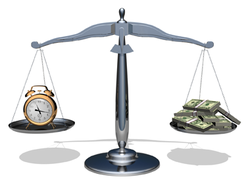
Most of the population sells their time or a derivative of their time. A Janitor sells his time at a certain rate per hour. A doctor sells his time at a higher rate per hour. As long as we are selling time, labor and skills, we are bound to the labor that we sell.

Years ago, I used to teach guitar to teenagers out of my living room. The work itself was rewarding, enjoyable and fun. However, the part of the job that I hated was that I was tethered to the living room and could not leave town if I wanted to. Every Tuesday, Wednesday and Saturday I had to be in the living room to teach the kids. If I wasn’t teaching, I wasn’t getting paid. Going away on a trip was impossible because I would have to reschedule everyone and give credit to my customers in the summertime which would eat into my vacation time.

While working as a guitar teacher, I decided that selling time was not for me.

I also had a rock band that I played in and managed on the side and the great thing about the band was that I learned how to sell other things besides my time.

I used to put on little rock shows at community centers in Winnipeg and I generally lost a lot of money with those shows. The formula was simple and poorly thought out; put in all the money, take all the risk, invite other bands to play and pray that people showed up to buy tickets to the show. 90% of the time, the bands would not draw a crowd and I would lose money; until I got smart.


Instead of renting the most affordable venue I could find, I started to rent the best venue in the city that I could NOT afford. I would put up $100 as a down payment on a $1000 venue to control a day on the calendar. I would then get tickets printed and sell spots in the show to other bands. I would sell the tickets in the show wholesale for $300 per band and would make profit before the show started. I would then make additional profit at the door and profit off of the merchandise.

Instead of selling time I sold: space, tickets, and merchandise. I liked selling space instead of time so I started to study real estate and today have put myself in a position where I no longer have to sell my time. Instead of selling my time, I sell space in my rental units and the space allows me to earn a living.

Unfortunately for most people, selling is a dirty word. Most people hate selling, they think it’s cheap, they think they are ripping people off, they don’t like rejection, they fear approaching others and asking for money. What is even more unfortunate is that we all sell everyday: we sell our time to our employers, we sell our girlfriend/boyfriend as to why they should date us, we sell our kids on why they should be quiet and stop screaming. Everyone sells, it’s the only way to make money and we have no choice over whether we sell or not – we must sell. However, we do have a choice over WHAT we sell.

We do not have to sell our time; we can sell many other things that are not tied to our labor. Real Estate and business are two ways that we can break the link between time and money and begin to sell things other than our time. When we build a business we get to choose what we are going to sell and begin to take full control of our lives.

There is only one way to make money in this world, and that is to sell. What do you sell to earn a living?

Thanks for reading,

Stefan Aarnio

Freedomway.ca

facebook.com/stefanaarnio

https://twitter.com/stefanaarnio

http://ca.linkedin.com/in/stefanaarnio

P.S: Please share this article if you found it enjoyable!



7 Comments

Flying the Flag: Make A Statement

12/22/2012

0 Comments

 
Picture
By: Stefan Aarnio
Freedomway.ca
facebook.com/stefanaarnio
https://twitter.com/stefanaarnio
http://ca.linkedin.com/in/stefanaarnio

Remember: Please share this article if you found it enjoyable!

What would you do if you had all of the money in the world? What is money anyways?

One of my favourite quotes about money/success/business is by Donald Trump:

“I wasn’t satisfied earning a good living. I wanted to make a statement”

What I love about this quote is that the money doesn't matter, the deals don't matter, the success doesn't matter, the lifestyle doesn't matter... What matters is the statement that is made by the work. 

Great Artists make statements, for that is the purpose of Art. An artist produces art to make a statement, Donald Trump builds buildings to make a statement, in many ways Donald Trump is an artist.

Donald Trump certainly does not have to get out of bed in the morning and go to work to pay his mortgage or put food on the table. Necessities like food were never a concern for Trump. Life would be empty if he could not create through his work. A starving Artist is the same, he has no material possessions, money doesn't matter and his life is empty without creating through his work.

When you make a commitment to excellence and stand for something, others will be attracted to your message. In a roundabout way, making a statement is what branding is all about.

Today I was sitting in Starbucks with a couple potential Joint Venture Partners and we were interviewing potential contractors to flip houses with. After one candidate left I made the statement to my partners that the contractor was an old "has-been". After a few minutes of discussing the contractor's flaws, a man sitting at an adjacent who had been listening to us talk said to me "you have to have your own crews!"

I replied "I do have my own crew"

We started talking to the man and he said "you were really arrogant with that last contractor". We continued to talk to him and he said "you remind me of me when I was your age".

It turns out that the man who had been listening in on our interviews owns over 5500 rental units in Winnipeg and is one of the most successful investors in the city. We continued to chat for 30 minutes about the business of real estate and he invited myself and my partners to spend some time with him in the new year.

What is amazing about the experience was that if I had not made such a bold statement, we would not have been approached by the very successful investor at the adjacent table. The connection with one of the biggest investors in the city could be very important in the future and I would have never made the connection if I did not make a statement. If I had cold called this successful investor, he would not take my call. However, since he had observed me and saw what I stood for, he reached out to make the connection with me.

Like attracts like and birds of a feather flock together. Put up a flag, show people who you are and what you stand for and you will attract those who think like you do. People are magnets and we attract other people who are charged like us; this is why branding is so important.

Make a statement, make it strong, make it bold and stand by it.

If you don't stand for something, you'll fall for anything.

Thanks for reading,
By: Stefan Aarnio
Freedomway.ca
facebook.com/stefanaarnio
https://twitter.com/stefanaarnio
http://ca.linkedin.com/in/stefanaarnio

P.S: Please share this article if you found it enjoyable!


0 Comments

The Formula for Wild Profits: Buy Intrinsic, Sell Irrational

12/17/2012

2 Comments

 
Picture
By: Stefan Aarnio
Freedomway.ca
facebook.com/stefanaarnio
https://twitter.com/stefanaarnio
http://ca.linkedin.com/in/stefanaarnio

Remember: Please share this article if you found it enjoyable!

Beauty is in the eye of the beholder, and so is value.

Everyday, we, the human race, wakes up and chases value until we drop dead from exhaustion at night.

It doesn't matter if you are Donald Trump sitting on a multi billion dollar real estate portfolio or monk in a temple. We are all chasing value.

The real question is, what is value and what is valuable?

Of course, value is highly subjective and can be very hard to determine.

I always find it interesting to see how excited people are to buy new clothes. Shopping malls are filled with rabid people who are frantically purchasing new garments to wear and 6 months later the clothes that they purchased will be donated to charity or thrown away.

The value of the clothes goes from "I will sacrifice my financial health to wear this" to absolutely "I will never wear this piece of garbage again".

The same thing happens with electronics. The day that apple releases a new iPhone or iPod, people are camping out overnight to get their hands on the new gadget and will pay a mortgage payment to own it. 6 months later, the same people are giving the old iPhone to their dog or are using it as a coaster on a coffee table because the newer, thinner model came out.

But what about investments? Real estate? Houses?

What is the true intrinsic value of a house?

Most middle class people will say "our house is our biggest asset"!

Most middle class people will have nearly all of their net-worth tied up in their home.

But what is the house actually worth? What is any house actually worth?

The truth is, all real estate is actually worth $0. Land and buildings are completely worthless.

If you would like to see the true value of land and buildings, drive to Detroit where you can buy a city block for $1 and nobody wants to buy it. People who live in detroit would rather have a $1 Taco at Taco Bell than own the liability of a city block.

Land, real estate, houses, and buildings only get value when there is a USE for it and an END USER. The end user places his or her subjective value on the Real Estate and that is where values come from.

There are more people who want to live in Manhattan than Detroit. That's why Manhattan real estate is worth so much more than Detroit.

At the end of the day, Real Estate is only worth what the end user is willing to pay. However, one metric I have been using more and more of lately is dollars per square foot.

When comparing two similar properties, dollars per square foot is one of the best ways to measure the current and future value of the property.

For example, in Winnipeg right now, many houses trade in the $200-$250 per square foot range. If you can make a purchase at $100 per square foot in an area that is trading at $200-$250, you have an opportunity for profit.

Construction in Winnipeg for a new build is approximately $200 per square foot, so if you can purchase for less than $200, you are getting the house cheaper than it would be to build. Likewise, if you pay $270 per square foot, you are paying more than it costs to build.

When analyzing retail single family homes, dollars per square foot is an excellent metric for intrinsic value of the property.

BUY ON INTRINSIC VALUE, SELL ON EMOTIONAL VALUE

One of the easiest ways to profit in any market is to:
1) Buy on intrinsic value and
2) Sell on emotional value

There is always profit in markets that have irrational buyers. Irrational buyers means that irrational amounts of money are floating around looking for irrational products.

For example, the neighborhood River Heights in Winnipeg is a desirable neighborhood where people will pay irrational amounts of money to get their kids into the local schools. In River heights properties trade for $200-$250 per square foot, prices that are well above cost to build.

However, in up and coming parts of town, there are "rational" buyers who will only pay prices that less than construction prices. These areas will trade at $150-200 dollars per square foot.

The key for profit is to buy with on an intrinsic value, pump the value and sell to an emotional, irrational buyer. The irrational buyer is unconcerned with what they are actually paying. They WANT the product and perceive that they NEED it. If you have a business, you want irrational buyers. Irrational buyers are consumers who allow you to create massive spreads in your products and grow your business.

Do what you can to attract irrational buyers. When you capture these buyers, take great care of them, and they will take great care of you.

Thanks for reading,
By: Stefan Aarnio
Freedomway.ca
facebook.com/stefanaarnio
https://twitter.com/stefanaarnio
http://ca.linkedin.com/in/stefanaarnio

P.S: Please share this article if you found it enjoyable!


2 Comments

The Science of Success: How to take "luck" out of the equation.

12/13/2012

2 Comments

 
Picture
By: Stefan Aarnio
Freedomway.ca
facebook.com/stefanaarnio
https://twitter.com/stefanaarnio
http://ca.linkedin.com/in/stefanaarnio

Remember: Please share this article if you found it enjoyable

What do the world's top athletes, actors, and salespeople all have in common?

They are the three highest paid positions in the world.

No one makes more money in a JOB than actors, athletes and salespeople; and contrary to popular belief, Actors, athletes and salespeople have much more in common than the average person may think.

What stands out to me when I think of top Actors, Athletes and Salespeople is that each of these top level positions requires more than 10,000 hours of practice to compete at the top level of performance.

All of these positions are PERFORMANCE based and at the starting level, the pay is absolutely ZERO.

Ask yourself, when was the last time you hired a rookie actor to entertain you? The answer is likely never.

When did you last hire a rookie Athlete to endorse your product or service? Likely never.

When was the last time you paid a fat commission cheque to a rookie salesperson who doesn't know how to sell? Likely never.

However, when was the last time Nike hired a PRO athlete do endorse it's products? Everyday.

When was the last time that Disney or 20th century FOX hired a PRO actor for a production? Everyday.

When was the last time a top level sales performer cashed a huge commission cheque for dominating his or her market? Everyday.

There are people making obscene amounts of money in these positions everyday. However, most people perceive these roles as feast or famine.

Why not feast everyday?

Most parents will encourage their young children to be Doctors, Lawyers or Accountants because they can grow up and earn a high guaranteed rate of pay.

Parents overlook actors, athletes and salespeople as REAL jobs because these positions are perceived as "risky". Of course, all parents generally hate risk when it comes to their children.

Many people attribute success in acting, athletics or sales to politics, luck, good looks, genetics or connections.

The truth is, success in Acting, Athletics and Sales takes all of the above, but most people overlook the hard work, preparation, hours of study, and persistence that separate the top from the bottom.

Success is a science that needs to be studied and engineered on a daily basis. However, most people are too "busy" to bother studying success.

For myself, I have become a student of success early in life and have achieved marginal success in acting and athletics. However, I have achieved professional success in sales by becoming a national sales leader very quickly after entering the field.

What made me different?

What makes anyone different?

I had the very fortunate experience of being coached by a veteran salesman who had sold kirby vacuums door to door for years: 

If you can show up at someone's house unannounced and sell them a vacuum that they do not need or want then you can sell anything. If you can do this consistently over many years, you are a sales professional.

Unfortunately, most salespeople today, namely realtors, don't know how to sell kirby vacuums. In some ways, the study of sales is a lost art-form.

I had a great respect for my veteran coach; he showed me how to engineer success in sales and create a science out of the mysterious "sales art-form".

My coach was a left-brained engineer who was NOT a natural salesperson. Most natural sales people are right-brained, conceptual, outgoing people (the exact opposite of an engineer). In many ways, my coach was a greater teacher than most because he was NOT naturally gifted in the field. He had to learn, practice and prepare for success on a daily basis. Since he had learned to prepare every day for decades, he taught me how to PREPARE for success on a daily basis and manipulate my results.

PREPARATION: HOW TO STACK THE ODDS IN YOUR FAVOUR:

The first thing my coach taught me to do was write down the following:

LESSON #1

actions = money
money does not equal actions

What he meant by this statement was that if we analyzed our daily actions, we could find which actions made money and which ones didn't.

In sales and in business, actions equals money.

However, the opposite is not true. Money does not equal actions.

If you tell someone to make $1,000,000, often they cannot figure out which actions generate the money...

Money is not an intrinsic motivator and should never be used to motivate a sales person - or any person for that matter.

If you figure out how much money you want to make, and figure out which actions make money, you can reverse engineer the amount of actions required on a daily basis to create the dollars desired.

For example, 50 phone calls (actions) will generate 10 conversations which will generate 2 meetings which will generate 10 meetings a week. 40% of the meetings will results in a sale valued at an average sale of $20,000... 4 average sales a week will generate an average of $80,000 a week.

If I consistently made 50 calls a day, annually I would generate $4.16 Million dollars for the company, of which I would get 3% or $124,800 annually. If I made 50 calls a week for 52 weeks, that totals 13,000 calls. $124,800 annually divided by $13,000 calls is $9.60 per call JUST FOR DIALLING THE PHONE.

All I needed to do was:

  1. Be prepared on a daily basis
  2. Call 50 people a day
  3. Book 2 meetings
  4. Conduct 2 meetings
  5. Close 4 per week

The actions that drive the whole model are CALLS. I could directly control my income by the number of CALLS I made. 

CALLS = ACTIONS = DOLLARS

If most people legitimately collected $9.60 per number DIALLED on a daily basis, I guarantee that most people would be dialling numbers until exhaustion.

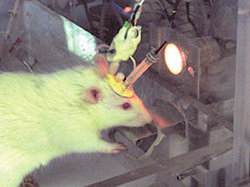
Years ago, some scientists hooked a rat up to a button that released dopamine (a pleasure drug released by the brain). The rat would push the button consistently until it would die of exhaustion. The rat wanted the dopamine so badly that it would sacrifice it's well being to get the pleasure-drug. As humans, we are exactly like the rat. When we earn money, dopamine is released. If we know that dialling the phone generates money, in theory, we would be dialling the phone until we drop dead... correct?

Incorrect.

In reality, we do not dial the phone until we die of exhaustion because:

Average people hate sales, they are scared of sales, they freeze and won't pick up the phone.

They freeze because they have not associated dialling numbers with pleasure (aka dollars).

The average person thinks that they make money when they CLOSE a sale, however, they actually EARN money when they dial phone numbers.

CLOSING IS AN EFFECT
DIALLING IS A CAUSE

Life is CAUSE and EFFECT.

To get an EFFECT, we must create a CAUSE.

No matter how good of a salesperson you are, you cannot close every sale. This is a fundamental truth of sales. However, you can always make another call or dial another number. Control your actions, because actions are the only things you actually control. If you control your actions, you will become the master of your results.

The most important action in the business of sales is calls. Every time we call, we increase our probability of winning. It's like buying another lottery ticket, except the lottery ticket is free and has much higher chances of success.

Sounds too good to be true, but it isn't.

If we understand the science of success in sales, then why would athletics or acting be any different?

All fields take preparation and can be reverse engineered into daily actions that compound over time.

The trick is to understand which actions create results that move us forward and move us backward and waste our time.

To obey the 80/20 rule. 20% of our actions create 80% of our results. We must find the 20% and ONLY do the 20% to increase our success.

In the sales example, my coach taught me that CALLS were the 20% that drove the business. Without calls, you may as well go home.

Take a moment to think about your business or your job and find your 20%. Which actions bring you your results? How can you do more of these actions? How many dollars do you make per action?

Know these numbers inside and out and the next level of success is yours to be had.

Thanks for reading,
Stefan Aarnio

Freedomway.ca
facebook.com/stefanaarnio
https://twitter.com/stefanaarnio
http://ca.linkedin.com/in/stefanaarnio

P.S: Please share this article if you found it enjoyable


2 Comments

Identity: Do not find yourself, Create yourself

12/12/2012

0 Comments

 
Picture
By: Stefan Aarnio
Freedomway.ca
facebook.com/stefanaarnio
https://twitter.com/stefanaarnio
http://ca.linkedin.com/in/stefanaarnio

Remember: Please share this article if you found it helpful

“Life isn't about finding yourself. Life is about creating yourself.” 
― George Bernard Shaw

So many people spend their lives trying to "find" themselves. The sad thing is, often, there is nothing to find.

In my own life, I spent much of my late teens and early twenties trying to "find" my identity. I worked at different jobs, I dressed differently, tried different hair-styles, played in different music groups, and struggled to answer the question "what do I want to do with my life"?

Sometimes I felt like I was chasing the wind. After many years of chasing, I learned that there was nothing to chase in the first place.

Everyone at some point gets to experiment with identity. We try different things, we experiment, we find things that work and things that don't. Some of the most successful people in history have shifted their identities and morphed as the world changes with them.

Some people I admire for re-inventing themselves are: Madonna (who is still relevant after 25+ years in pop music which is like 1000 years in real life), Steve Jobs (a man who re-invented himself and his company, Apple, many times) and Johnny Cash (who went from mainstream into obscurity and back into the public's eye).

These people have all gone through the highs and lows of identity by becoming relevant, obscure and then relevant again. They all created identities that were true to themselves and re-created them when necessary.

We are all human "be-ings" and not human "do-ings".

I always find it interesting that people ask on a daily basis "what do you DO for a living?" what do you "DO" with your time? What do you want to "DO" with your life?

Doing implies actions, which is important for success, but I think that being is much more important because we are human BE-ings.

If we know who we want to "BE", then we can quickly find out what we want to "DO".

For myself, I have stopped asking myself the question of "what do I want to do"? and have switched to the question of "who do I want to be?"

Since changing this one question, my success rate has sky rocketed.

I keep a list of 25 people that I admire and want to "be". Of course, I don't want to directly copy these people in every aspect, but what I will do is copy the things that I like about them. These 25 people that I want to be are "targets" for myself that I can attempt to emulate.

What I find most exciting about the list of 25 people that I want to "be", is when I write the things that I like most about them, I can find the common traits that I admire most.

For example, some of the people on my list are:

BRAD LAMB - Expert retailer, sales genius, branding genius
DONALD TRUMP - Branding genius, luxury developer, luxury brand, luxury retailer, maverick, media genius.
RICHARD BRANSON - Conceptual thinker, Venture capitalist, extremely prolific, branding genius, media genius, knows how to get press, risk taker, maverick
STEVE JOBS - Artist, Icon, Rebel, challenged the status quo, came from nothing, has ultimate career comeback, more relevant after death, maser retailer.
JOHNNY CASH - Artist, Icon, Rebel, challenged the status quo, came from nothing, ultimate career comeback, more relevant after death.

My list of people I want to be includes: Real estate entrepreneurs, retailers, developers, inventors, musicians, artists, military generals, chefs, movie and fictional characters.

What is more important than the specific people on the list, are the traits that I associate with each one.

For example, most of the people on my list are: Artists, Iconic, rebellious, mavericks, prolific, branding geniuses, luxury, media stars and retailers.

If most of the people on my list have those traits, and I want to "be" them, then those are the traits that I must focus on and strive for in my own life and business.

After finding 25 people for your list and taking an inventory of the traits that you admire in each person, you can quickly find out what kind of identity you must create for yourself.

What I find interesting about the "list" is that there are many successful people that I can think of that didn't make the cut. These are people I study and admire, but they are not people that I would want to "be". 

For example: Robert Kiyosaki is someone I admire and have studied in great detail, but I do not wish to be Kiyosaki. He is a great teacher, but I don't want to be a teacher.

The more specific and detailed you become with this list, the more you will find your identity.

We can see ourselves only when we see our reflection in the mirror. The list of 25 people is our way of creating a mirror to see into ourselves. This mirror allows us to see what we are on the inside.

Once we can see who we want to become, we can begin the process of reverse engineering our identity so that we can become the person we were destined to be.

Thanks for reading,
Stefan Aarnio
Freedomway.ca
facebook.com/stefanaarnio
https://twitter.com/stefanaarnio
http://ca.linkedin.com/in/stefanaarnio

P.S: Please share this article if you found it helpful

0 Comments

Becoming Unstoppable: Why we only need 1 reason to succeed.

12/10/2012

0 Comments

 
Picture
By: Stefan Aarnio
Freedomway.ca
facebook.com/stefanaarnio
https://twitter.com/stefanaarnio
http://ca.linkedin.com/in/stefanaarnio

Remember: Please share this article if you found it helpful

It’s the unconquerable soul of man, not the nature of the weapon he uses, that insures victory.” – General George Patton.

Why are some people absolutely unstoppable while others quit at the first sign of difficulty?

Why do some people manage to make it to the gym every morning while others only show up on January 1st and quit by January 7th?

Why do some marriages fall apart after 5, 10, 15 or the 20 year mark while some last "until death"?

Why do immigrants who come to a new country with nothing manage to get rich while others born with every advantage slip into poverty?

The people who manage to push through adversity all have one thing in common: They have a strong "Why".

A wise man once said "Some men have 1000's of reasons to fail, but they only need 1 reason to succeed".

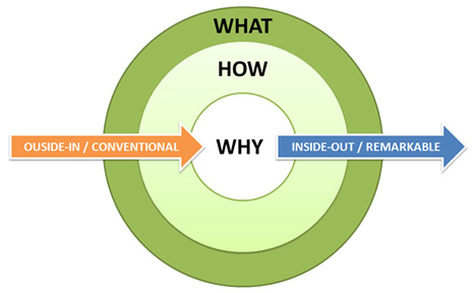
Simon Sinek, a brilliant speaker, educator and researcher discovered the concept of "The golden circle".

Simon wanted to know what the difference was between the average person and the exceptional person. 

What Simon discovered was that behind every person, organization or business there is a WHY, a HOW and a WHAT.

The average person, business or organization focuses on the WHAT first, the HOW second and may never address the WHY. These people work from the "outside-in" and focus externally.

The exceptional person, business or organization focuses on the WHY first, the HOW second and the WHAT last. These people work from the "inside-out" and focus internally first.

The results between the average and the exceptional are both shocking and yield completely different results.

Consider two computer companies: Apple and Dell.

On one hand, communication from Dell operates from the outside-in:

1)    WHAT We make great computers,

2)    HOW they are beautifully designed and easy to use, "want to buy one"?

3)    WHY - ????

Communication from Apple on the other hand is from the "inside-out":

1)    WHY - With everything we do, we believe in challenging the status quo,

2)    HOW - the way we challenge the status quo is that our computers are beautifully designed and easy to use,

3)    WHAT - we make great computers, want to buy one?

To compare the results of Apple to Dell in the last 5 years: Apple has become the most respected brand in the world many years in a row and the most valuable company in history, while Dell has fallen off the radar.

The golden circle can easily be applied to fitness as well.

The average person approaches the gym on January 1st every year with the following mentality:

1)    WHAT – I want to get fit this year and lose some weight

2)    HOW – I am going to buy a gym pass

3)    WHY – This is my new year’s resolution

This person is usually delinquent on gym attendance by the time February rolls around because a new year’s resolution is not a strong enough reason to ensure success.

The exceptional person approaches the gym with the following mentality:

1)    WHY – I must go the gym consistently to create and maintain the body I desire. This is integral to my self-image, self-esteem and personal success.

2)    HOW – I will go the gym every day

3)    WHAT – I will have a fit and healthy body that reflects my self-image, self esteem and personal success.

If I were a betting man, I would bet on the “exceptional” person every time for success because the “why” is much stronger and I know that the mission will be accomplished. 

When you compare the emotional strength of a “new years resolutions” vs. “my personal self esteem”, self-esteem will win every time because it is a much stronger emotion than an arbitrary goal set at a new year’s party.

When the golden circle is applied to marriage, it is very easy to see which married couples will “make it” and which ones won’t.

Divorce rates are at an all time high right now because many people set up their marriages with the following mission:

1)    WHY – We’re getting older, balder and fatter; we both want to raise some kids before it’s too late.

2)    HOW – We will get married because marriage is required to have kids.

3)    WHAT – Kids, aren’t they wonderful?

This relationship will last at a maximum 16-20 years because these people got married on the premise of raising kids. As soon as the kids are old enough to leave home, the marriage usually falls because the marriage was not built on the premise of a primary relationship; these two people are not committing to each other - they are committing to the kids.

A stronger marriage that would last “until death” would be:

1)    WHY – We are in this relationship to help the other person become the best he or she can be. My partner spiritually compliments me and I spiritually compliment him or her.

2)    HOW – We will spiritually commit to each other, make it official and get married

3)    WHAT – A spiritual union between two committed people through marriage - Children may happen.

The reason to succeed needs to be greater than the reason to fail; if the WHY is strong enough, then success is ensured.

Unfortunately, finding the “why” in our businesses, personal lives and relationships is not an easy task.

What can be even more cumbersome is the fact that many of us may be in our businesses or personal endeavors for the wrong reasons.

If you are in a business or relationship for the wrong reason, correct the mistake, establish a new “why” and watch your success reach new heights. 

Remember: a man can have thousands of reasons to fail, but he only needs one reason to succeed.

Thanks for reading,
Stefan Aarnio
Freedomway.ca
facebook.com/stefanaarnio
https://twitter.com/stefanaarnio
http://ca.linkedin.com/in/stefanaarnio

P.S: Please share this article if you found it helpful


0 Comments

Victim Mentality, The Deadliest Poison: 18 Ways that your Brain may be Killing You.

12/5/2012

1 Comment

 
Picture
By: Stefan Aarnio
Freedomway.ca
facebook.com/stefanaarnio
https://twitter.com/stefanaarnio
http://ca.linkedin.com/in/stefanaarnio

Remember: Please share this article if you found it helpful

“Suppose a farmer has some land, and it's good, fertile land. The land gives the farmer a choice; he may plant in that land whatever he chooses. The land doesn't care. It's up to the farmer to make the decision.

We're comparing the human mind with the land because the mind, like the land, doesn't care what you plant in it. It will return what you plant, but it doesn't care what you plant.

Now, let's say that the farmer has two seeds in his hand- one is a seed of corn, the other is nightshade, a deadly poison. He digs two little holes in the earth and he plants both seeds-one corn, the other nightshade (a deadly poison). He covers up the holes, waters and takes care of the land…and what will happen? Invariably, the land will return what was planted.

As it's written in the Bible, "As ye sow, so shall ye reap."

Remember the land doesn't care. It will return poison in just as wonderful abundance as it will corn. So up come the two plants – one corn, one poison.”

-Earl Nightingale

Earl Nightingale who was one of the best self-development minds of all time had an unbeatable analogy for the human mind.

Nightingale compared the human mind to a fertile piece of land where we can plant whichever seeds we choose to plant.

The mind is neutral and much like fertile land and will return whatever we choose to plant.

What I find amazing on a day-to-day basis is to see what people plant in the fertile earth of the mind.

Instead of studying success, listening to lectures, reading books on success, attending seminars, creating visions, creating plans, and visualizing what we want; most people fill their brains with garbage.

Most people “mind feed” on mainstream news, mainstream radio, CNN, Fox News, Dr. Phil, Maury, daytime television, infomercials, video games, soap operas, sitcoms, Hollywood movies, magazines, pornography and trash fictional novels (which can also be pornography aka fifty shades of grey).

Finish this sentence…

Garbage in…

Garbage out?

Most people will finish the sentence “garbage in” with “garbage out” implying that if we put garbage into our brains, we will receive garbage as output.

The truth is, the results are much worse…

In reality, Garbage goes in, it festers and multiplies by three. “Garbage” has “Garbage Babies who turn out to be triplets” and morphs into a debilitating emotional cancer.

All of the above “garbage” in our mind feed sources can create a cesspool of poison in our emotional brain that breeds fear and inhibits our ability to take action.

We are given the most powerful, fertile land known to man and unfortunately; most of us are negligent farmers who fail to plant corn.

Even worse, instead of planting corn, or better yet – planting NOTHING; we plant an abundance of the deadliest poison of all.

THE DEADLIEST POISON

If good, clean, positive, empowering, affirming thoughts are corn, then what thoughts account for the deadliest poison?

Steve Chandler, a man who spent the majority of his life studying how the brain works as an psychological warfare specialist, defines the brain as working in one of two ways:

1)   The brain either functions with an OWNERSHIP mentality

2)   OR the brain functions with a VICTIM mentality

The ownership mentality represents the brain working as it was designed and this is where creativity, success, opportunity, fearlessness, and happiness come from.

Those of us with an ownership mentality are planting corn on a daily basis.

The opposite of an ownership mentality is a victim mentality. The victim mentality is the exact polar opposite of the way that the brain actually works. From an early age, through school and traditional upbringings, most children are taught to use their brain in the exact opposite way that it functions.

We teach people in our school systems to plant nightshade instead of corn and most people plant far more nightshade then corn every day.

Lets briefly compare an OWNERSHIP mentality to a VICTIM mentality.

18 differences between an OWNER and a VICTIM:

1)   Owners are Positively charged, Victims are negatively charged.

2)   Owners are happy from the inside (all children are born happy), Victims believe that happiness comes from the outside.

3)   Owners see and seek opportunity; Victims expect to have opportunities “presented” to them.

4)   Owners use the brain for creating; Victims do not create and feel needy instead.

5)   Children are born as owners: 90% of young children believe that they are good at poetry, dancing and singing. Most adults have become conditioned to be victims: 75% of people aged 30+ believe they have no ability at dancing, singing and poetry

6)   Owners are fearless; victims are fearful

7)   Owners actively seek wisdom in every experience; they say “what can I get from this situation”? While Victims turn their brain off and passively float from experience to experience. Victims say “I don’t want to know” or “I’m trying to get through this experience”.

8)  Owners actively create situations, Victims passively react to situations

9)  Owners are the authentic YOU; Victims are YOU reduced down to an animal level

10) Owners say “I use life”’; Victims say “life uses me”

11) You were born an Owner; Victims are “added on” to your personality through conditioning.

12) Owners say empowering words of intent like “I want to”, “I will”, “I Choose to”; Victims say de-motivating words that crash the higher brain functions like “I should”.

13) Owners eat to live; Victims live to eat

14) Owners pull up their socks and complete tasks that others don’t want to do. It’s “horrible” to work 12 hours a day towards a goal that you have chosen. However, Victims take no action and live life as “miserable”. Life is a choice between the horrible and the miserable.

15)  Owners have an internal self-rewarding belief system. Victims have an external belief system that was inherited from someone else.

16) Owners operate from a place of LOVE while Victims operate from a place of FEAR.

17) Owners find satisfaction in measuring small improvements and tasks over time. Victims seek success with an “all or nothing” mentality. If they don’t have 6 pack abs after 10 sit-ups, they quit.

18) Owners create a vision of who they want to be and start living in that reality NOW while Victims are living a life as one half cynic and one half skeptic.

In my own mind, I have become a diligent farmer and have “weeded out” most of the nightshade that has grown in my brain. To me, planting corn is very important and I have hired a coach to ensure that I can produce the best crops possible.

The mind can be a brilliant machine that creates wonderful art, health, wealth and life or it can be a prison that kills dreams.

Take some time to go through the list of the 18 differences between owner and victim mentality and isolate any limiting beliefs you may have.

Strive to become a diligent farmer and produce the sweetest crop of corn that has ever grown.


Thanks for reading,

Stefan Aarnio
Freedomway.ca
facebook.com/stefanaarnio
https://twitter.com/stefanaarnio
http://ca.linkedin.com/in/stefanaarnio

P.S: Please share this article if you found it helpful


1 Comment

Lions vs. Gazelles: Both are running, but who would you rather be?

12/3/2012

3 Comments

 
Picture
By: Stefan Aarnio
Freedomway.ca
facebook.com/stefanaarnio
https://twitter.com/stefanaarnio
http://ca.linkedin.com/in/stefanaarnio

Remember: Please share this article if you found it helpful

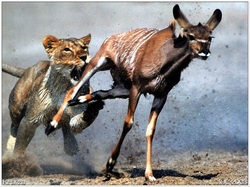
“Every morning in Africa, a gazelle wakes up, it knows it must outrun the fastest lion or it will be killed. Every morning in Africa, a lion wakes up. It knows it must run faster than the slowest gazelle, or it will starve. It doesn't matter whether you're the lion or a gazelle-when the sun comes up, you'd better be running.” – Christopher McDougall

In every market whether business, jobs or investing, there are lions and there are gazelles. The lions are the fastest, strongest, fiercest animals in the field while the gazelle is a fast, light, pack animal that finds safety in numbers.

The lion represents the leader in the market: he feeds on his competition and swallows up the slowest weakest gazelles. There are few lions, and only the best can become lions in the field.

The gazelles symbolize the “herd” of average players that flood the market and swarm the terrain in packs. Where one gazelle goes, the rest follow.  Unlike the few lions on the field, there are scores of gazelles. As a gazelle, you do not have to be the best to survive. Instead, you must only be faster than your slowest competition to win another day of life.

The lion requires a complex skill set and a high standard of performance to live, He must become strategic while hunting and move contrary to the direction of the herd. He must appear where the herd does not expect him if he is going to kill and live another day.

The gazelles only need an average skill set and average standard of performance. The herd feels secure when everyone is the same and the gazelles organize themselves in a crowd. The crowd makes the gazelles feel safe because it gives them a thin veil of protection from the lions. This thin veil keeps the lion from focusing on any one gazelle, for the lion cannot catch them all. The lion can only catch one gazelle for his dinner and let the rest of the herd go. The gazelles know this and they base their survival strategy around this fact.

As an investor or entrepreneur, which would you rather be? The Lion or the Gazelle?

Would you rather have the illusion of safety and move with the herd as a gazelle?

Or would you rather have the freedom of the lion to hunt and kill on your own terms?

In my investment/entrepreneurial career, I have always chosen to become the lion.

In my opinion, the lion is a better choice in the investment/entrepreneurial world because I have always had a rule for myself: Whatever the average person does – do the opposite of it and you will succeed.

Most people are not successful at all, so if you do the opposite of the average person, logically you will be a success.

If the average person wants to buy, then sell.

If the average person drinks, then don’t drink.

If the average person smokes, then don’t smoke.

If the average person has a 60-inch plasma screen TV, then don’t own a TV.

If the average person has a PC, get a mac.

If the average person doesn’t exercise, then exercise.

The formula is quite simple and it works more often than not.

People are pack animals, much like gazelles. As mammals, we flock and freeze when we are scared. We form packs to feel safe and we want to belong to a group.

Unfortunately, groups don’t know how to make decisions or create good ideas. Decisions and ideas come from an individual and never a collective.

A committee of professionals built the titanic while one man built the Ark.

No matter which subset of the world or the market you look at, there is always a majority and a minority.

Pareto law states that 20% of your actions create 80% of your results. This relationship applies to markets and people as well. 80% of the market is dominated by 20% of the players.

In the case of the lion and the gazelle, it would be more skewed. Perhaps the lions as 5% of the animals control 95% of the gazelles.

In America, 1% control 99% of the world. This is exactly the same concept as the lions and the gazelles.


The question is, why would anyone want to be a gazelle when you could be a lion?


The truth is, most people are not lions because it’s easy and convenient to be a gazelle while it is extremely difficult to become a lion.

The gazelles have safety in numbers; they do not have to be fast (just faster than the competition), they can feed on grass, which is plentiful and at the end of the day they can go to sleep with a belly full of grass. They don’t have to worry about hunting and killing because they can graze all day. Gazelles know that tomorrow will be the same easy routine and find security in the herd.

Lions on the other hand hunt alone or in very small groups. They have to be much faster than the slowest gazelle or they starve to death. Lions cannot eat grass like the gazelle and require meat survive. Every day the lion must be tracking and hunting for his next kill.  If the lion fails to kill a gazelle, he goes to bed with an empty stomach and too many empty stomachs in a row means death for the lion. The lion has no security and must be better than the gazelle to survive.

To be a gazelle is to be average.

To be a lion is to be a champion, a performer and an athlete.

Every day, both the lion and the gazelle are running, to survive. But what makes the two animals different is “who” they must be on a daily basis to survive.

In every business, every industry and every market, there are lions and there are gazelles.

Every morning when you wake up, you must make the choice between running the field as a lion or a gazelle. No matter which one you choose, you are going to be running anyways.

Are you committed to being the best in your field and taking the lead as the lion? Or would you rather blend into the crowd and take your chances as a gazelle?

In the end, it doesn’t really matter which animal you are. Either way, you will be running. But if you’re running anyways, you might as well choose excellence and learn to be the lion.

Thanks for reading,
Stefan Aarnio
Freedomway.ca
facebook.com/stefanaarnio
https://twitter.com/stefanaarnio
http://ca.linkedin.com/in/stefanaarnio

P.S: Please share this article if you found it helpful


3 Comments

Profit from ignorance: Zero Based Thinking

11/30/2012

0 Comments

 
Picture
By: Stefan Aarnio
Freedomway.ca
facebook.com/stefanaarnio
https://twitter.com/stefanaarnio
http://ca.linkedin.com/in/stefanaarnio

Remember: Please share this article if you found it helpful

 "All I know is that I know nothing"
-Socrates

Why is it that in life, the smarter we become, the less we know?

When I was 7 years old, I was the smartest person in the world. I knew everything there was to know about space, the planets and the solar system.

When I was 7, the facts of the solar system were as follows:
  1. We have 9 planets
  2. A sun
  3. A bunch of stars

If I knew these basic facts, I knew everything there was to know about outer space and received a gold star.

With this limited knowledge, I knew 100% of what there was to know about space and was an expert until junior high when suddenly, the subject of outer space expanded and became more complicated.

I started to learn that I was no longer an expert on outer space because now we had to know:
  1. That the sun is made of gas
  2. Gravity holds the solar system together
  3. The planets have multiple moons that orbit them etc.

Suddenly, I went from being a 7 year old expert to a 12 year old ignoramus who had to re-learn the facts of the universe.

When I was 7 I knew it all, when I was 12 I suddenly became ignorant about the universe.

In high school, I ran into the same problem. New information about the universe flooded my context through physics and chemistry. My knowledge base exploded and I could not keep up with all of the new information. With each new level of proficiency, I learned that in-fact, I knew nothing about the universe.

With each new level of information,  I knew less and less. The more I studied, the less I knew.

Today I know virtually nothing about space and the solar system.

Even facts that used to be true are suddenly un-true. For example: We used to have 9 planets and now there are 8. 

Pluto is no longer a planet... what changed?

What I used to know is no longer relevant in today's world. 

As Einstein says: "change is the only constant in the universe".

How is a person supposed to keep up with all of the new information that is introduced to us every day in this brave new world?

We become experts in a field, learn everything there is to know and suddenly the information changes, the market changes, or we find the "next" level in our field.

No matter what we do, we know nothing.

ENTER ZERO BASED THINKING

Zero based thinking is the concept of always knowing nothing. 

In zero based thinking, we are always at the beginning... we forget everything we used to know.

The reason why we must forget our prior knowledge is because what we knew yesterday no longer applies in our current context. 

The same concept applies when we want to take our business or our life to the next level and bring it into the future.

"If you do what you have always done, you will receive what you have always got."

Zero based thinking applies when we want to take our life and our business to the next level.

For example, when you are a child and begin to earn money, you are 2 figure earner or a 3 figure earner. You get a paper route, work part time, save up your pennies and make dollars.

When you're in high school, you have a part time job babysitting or flipping burgers and become a 4 figure earner working 2 or 3 months of the year at a summer job. Becoming a 4 figure earner is a different process than becoming a 3 figure earner.

Of course, the chain continues...

To become a 5 figure earner, you enter the world of "full time employment". Through promotions and proficiency in the corporate world, you can transform into a 6 figure earner. However, this is where most people get stuck.

When we become 6 figure earners, our context usually becomes frozen. We think we know everything there is to know and our egos keep us from learning how to get to the next level.

To jump to the next level, we must use Zero Based thinking and forget everything we used to know about earning money because a 7 figure earner follows a completely different process than a 6 figure earner.

Usually a person can reach 6 figures by pure effort and energy. Hard work, blood, sweat and tears can produce 6 figures quite easily these days and many people achieve this accomplishment.

However, to reach 7 figures is completely different. 7 figures is a different set of actions and a wildly different mind set. Hard work alone will not allow a person to jump from 6 to 7 figures.

To become a 7 figure earner, we must "build a business", build a team, build systems, build marketing campaigns, manage people, sell, and essentially run an enterprise.

We must unlearn what we used to know as a 2 figure, 3 figure, 4 figure, 5 figure and 6 figure earner stages because 7 figures is a completely different ball game.

Naturally, the chain continues. 8 figures is completely different from 7 and 9 figures is completely different from 8.

But what is the lesson?

No matter what "level" we are on in life, we must always employ Zero based thinking and approach our situation with fresh eyes. We must deconstruct what we used to know and re-learn the new facts of the world as they become relevant to us in a new context.

Unfortunately, egos and pride stop us from using zero based thinking consistently and often, we need outside personal help from a coach or mentor to expand our context and allow us to see outside of our tiny "box".

For myself in my business, I have completely changed my thinking this year from January 2012 until now December 2012.

I started off with a 5 figure mindset and through coaching and mentoring, I have been able to expand my context. This year alone, I have expanded to a 6 figure mindset and am now approaching a 7 figure mindset.

All that I have to do is execute actions based on my mindset and let the results catch up to my thinking. This process will likely take 12-24 months.

What is wonderful about expanding the mind through Zero based thinking is that: "an expanded mind never returns to it's original size".

What becomes challenging throughout the process, however, is to keep the Zero based mindset and to refrain from becoming a "know it all". 

This year I have re-built my website 4 times, re-designed my business cards 6 times, changed my business model 6 times and will likely re-brand before the year is over.

I am constantly "back at the beginning" in my learning process and this is where major growth comes from.

If you are interested in taking your business to the next level,  using Zero based thinking can be a simple process.

Find someone who is more successful than you and get them to coach you to the next level.

To become 6 figures, you must learn from a 7 figure.
To become 7 figures, you must learn from an 8 figure.
To become 8 figures, you must learn from a 9 figure etc.

The chain never ends and goes on forever... this is the beauty of life.

The real question is, where on the chain do you want to stop?

Thanks for reading,
Stefan Aarnio
Freedomway.ca
facebook.com/stefanaarnio
https://twitter.com/stefanaarnio
http://ca.linkedin.com/in/stefanaarnio

P.S: Please share this article if you found it helpful


0 Comments

Risk Tolerance: How do you personally define risk?

11/30/2012

1 Comment

 
Picture
By: Stefan Aarnio
Freedomway.ca
facebook.com/stefanaarnio
https://twitter.com/stefanaarnio
http://ca.linkedin.com/in/stefanaarnio

Remember: Please share this article if you found it helpful

In life, there is no such thing as a guarantee.

Everything we do always has an element of risk, however, we do not consider every day things like driving to work or crossing the street to be “risky”.

Today I googled “the definition of risk” and this definition came up from thefreedictionary.com:

risk  (rsk)

n.

1. The possibility of suffering harm or loss; danger.

2. A factor, thing, element, or course involving uncertain danger; a hazard: "the usual risks of the desert: rattlesnakes, the heat, and lack of water" (Frank Clancy).

3.

a. The danger or probability of loss to an insurer.

b. The amount that an insurance company stands to lose.

4.

a. The variability of returns from an investment.

b. The chance of nonpayment of a debt.

All of the definitions above involve some form of loss, hazard, suffering and an element of variability, probability or chance.

What I find to be interesting about risk is that every single person I meet has a different subjective definition.

Often, when I am discussing risk with another investor, I will ask what their personal definition of risk is.


More often then not, investors will define risk as the chance or probability that he or she loses on an investment.

This definition is sufficient, but I find it to be a very unsophisticated definition of risk.

Robert Kiyosaki says that intelligence is the ability to make distinctions. The more distinctions we can make, the more intelligent we are.

For example, there are over 7500 variations of apples in the world. When it comes to apples, I am not unsophisticated and can only name a few variations: red delicious, granny smith, crab apples, and Macintosh. When it comes to apples, I am very unintelligent. A person who can name 100 variations of apples is much more intelligent than I am on the subject of apples.

When I hear a person’s definition of risk, I can immediately find out what their sophistication level is when it comes to business and investing.

My personal definition of risk has changed many times throughout my life. I used to believe in luck, and now I do not. All I believe in is actions performed and numbers. Life and business are a numbers game, if you can produce the volume and hit the numbers, you will succeed every time. There is no luck.

My definition of risk is:

Risk: Take an inventory of the elements that are under your control and compare them to the elements that are out of your control. Then ask yourself: am I ok with this? If you are ok, then proceed with the risk. If you are not ok with the degree of control, then do not proceed.

My definition of risk has two primary distinctions that the average person’s definition does not:

1)   My definition of risk assesses your degree of control in a situation

2)   My definition asses your emotions and how you feel about your level of control

Notice that I eliminate “probability” or “chance” from my definition of risk. In my world, there is no such thing as probability because failure is not an option.


Naturally, there are things that can happen outside of my control, and I must address and mitigate all contingencies before proceeding. Should something outside of my control become an issue, the question is: how do we recover form this position?

In my world, I understand that in life and in business, plans fail, people fail, systems fail, markets fail and what is more important than relying on all these imperfect elements is to understand how to recover and “fix” the failures.

I build failure and multiple contingency plans into my ventures and understand that failure and recovery is part of the game.

In real estate, between 5% and 10% on the balance sheet will be factored in for vacancy on multi family buildings.

Restaurants and traditional businesses will build theft into their balance sheets.

Sophisticated business people understand that failure; loss and recovery are all part of doing business and factor it in to their projections and balance sheets in advance.

My definition understands that there are elements in our control and out of our control. There is no luck; only degrees of control. If you are ok with your degree of control, then proceed with the “risk”.

Of course, there is always that moment where we must “take a leap of faith” and no amount of due diligence can protect us from the elements that are out of our control.

What is most important when entering an endeavor with risk is to ask ourselves “how do we escape if we want to exit?”

For myself, I love real estate because no matter how bad things go, there is always a large tangible asset attached to the venture that can be liquidated to recover my investor’s capital.

Again, we come back to elements under control and elements out of control.

When raising capital from an investor or considering a “risky” venture take them through the following scenarios to asses if the venture is right for them:

1)   The best case scenario – everyone loves this scenario, and it rarely happens.

2)   The realistic scenario – this is the likely outcome

3)   The worst case scenario – this is second most likely scenario

4)   The nightmare scenario – this is as bad as it gets, you don’t want to find yourself in the nightmare scenario.

For myself, I have a low risk tolerance and I always say to my capital partners “if you are ok with the nightmare scenario, then we are ok to do business”

At the end of the day, risk is all about emotions. If we are emotionally ok with our degree of control in the risk and how the nightmare scenario would affect our life, then we are ready for the risk.

If we cannot handle the elements out of control and would not be able to live with the nightmare scenario, then the risk is not for you.

There is a famous saying “nothing ventured, nothing gained” and we must all take calculated risks in our pursuit of success. The question is, after exploring a few definitions of risk, how do you personally define risk going forward?

Your personal definition of risk is extremely important because it will define which risks to take and which ones to avoid. To paraphrase Sun Tzu, know yourself and know your enemy and you will be victorious in every battle.

Thanks for reading,

Stefan Aarnio

Freedomway.ca
facebook.com/stefanaarnio
https://twitter.com/stefanaarnio
http://ca.linkedin.com/in/stefanaarnio

P.S: Please share this article if you found it helpful


1 Comment
<<Previous
Forward>>

    RSS Feed

    Stefan Aarnio

    Stefan Aarnio is a Real Estate Investor, entrepreneur and artist based out of Winnipeg, Manitoba.His real estate website is Freedom Way Joint Ventures  His art can be seen at http://stefanaarnioart.com

    View my profile on LinkedIn

    Archives

    October 2013
    September 2013
    July 2013
    April 2013
    March 2013
    February 2013
    January 2013
    December 2012
    November 2012
    October 2012
    September 2012

    Categories

    All
    Amateurs
    Art
    Authors
    Billion Dollar Business
    Branding
    Business
    Business Building
    Buyers
    Cash Flow
    Change
    Charity
    Coaching
    Connection
    Contractors
    Deal Partners
    Deals
    Decision Making
    Distributors
    Dragon's Den
    Dreams
    Economy
    Education
    Email
    Emotional Value
    Emotions
    Enthusiasm
    Entrepreneurship
    Evolution
    Fashion
    Fears
    Franchise
    Fundamentals
    Grit
    History
    Identity
    Industry
    Instant Equity
    Instant Profits
    International
    Intrinsic Value
    Investing
    Jobs
    Joint Ventures
    Leadership
    Marketing
    Missed Opportunity
    Money
    Mould
    Needs
    Negotiation
    Net Migration
    Networking
    Outsourcing
    Passion
    Passive Income
    People
    Persistance
    Philanthropy
    Power Team
    Producers
    Professional
    Professionalism
    Profits
    Raising Capital
    Real Estate
    Recession
    Return On Effort
    Return On Learning
    Return On Relationships
    Return On Time
    Risk Mitigation
    Self Employed
    Selling
    Shark Tank
    Social Status
    Speed
    Strategy
    Success
    Tactics
    Team
    Time Managment
    Traitors
    Unlimited Cash
    Value
    Venture Capital
    Vision
    Wages
    War
    Weakness

    RSS Feed

Powered by Create your own unique website with customizable templates.