Freedomway.ca - Stefan Aarnio's Blog
  • Who We Are
  • Blog
  • Book
    • Money People Deal: The Fastest Way To Real Estate Wealth
  • Resources
    • Recommended Books
  • Bring Us Deals
  • Awards
  • Completed Projects
    • Completed Projects
    • The Benefits Of Hands Off Investing
  • Press
    • Winnipeg Free Press
    • Canadian Real Estate Wealth February 2013
  • YouTube Channel
  • Interviews
  • Art & Philanthropy
  • Strategic Partners
  • Contact
  • Exclusive Investor Club
  • New Page

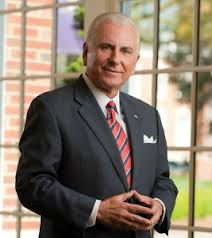
Do you REALLY have a business? Or do you have a JOB? With wisdom from powerhouse entrepreneur Nido Qubein.

10/22/2012

0 Comments

 
Picture
By Stefan Aarnio
Freedomway.ca

The english language can be a deceiving and confusing tool that can either empower you or cripple you. 

Years ago, when I was earning a degree in English at the University of Manitoba, I learned that words in the english language are actually very flawed and primitive tools that do not really work. 

Words can be a broken, primitive man-made tool. It's common knowledge that words account for less than 10% of our actual communication (I believe the number is around 7% of communication.)

For example: In Canada, we have people who are really self employed that call themselves "entrepreneurs". Realistically these people trade time for money every day, operate their business as technicians, have zero competent employees, take on all the risk and liability and cannot leave their business for a second or it falls apart.

Words are confusing tools: Just because you are self-employed does not mean you are an entrepreneur.

Of course, we are working with the English language and words are deceiving. There is a vast population of self employed people in Canada and around the world who think and believe that they are true "business owners" or "entrepreneurs". The reality is, these people own risky jobs with high time requirements and overhead. 

They have not built any real businesses, and they cannot sell their "business" because there is nothing to sell. However, many of these people think they have a REAL business.

Words do not work to differentiate a legitimate business from a self-employed JOB... for many, this can be a very confusing scenario.

My definition of an entrepreneur is a person who starts businesses. Starting businesses is an entrepreneur's vocation. They start businesses often, likely have multiple businesses at once and are always aiming to start yet another business. This is the entrepreneur's game and few have the stomachs or the balls required to play the game.

The word "Entrepreneur" (to me) is all about the art of the start up. The best entrepreneurs are visionaries and they are brilliant at creating a successful chain of businesses and brands. They often do not stay in a particular business too long because they actually build a competent management teams to take over and grow the business without them.

The best entrepreneurs in the world (Today and in the past) are visionaries: Steve Jobs, Bill Gates, Richard Branson, Henry Ford, Thomas Edison and others have all started a chain of ventures and created a succession of businesses. These men were creators who created businesses often and eventually left a vibrant collection of businesses behind upon death.

But how does this apply to you?

One very successful living entrepreneur that I am studying right now is Nido Qubein. Nido is an immigrant from Lebanon who came to America as a boy and has built a succession of businesses valued at over $100 million dollars a piece. I have heard that his estimated net worth is around $500 million dollars (but net worth is very hard to determine).

As a sign of a true entrepreneur, all of Nido's businesses are in unrelated industries. He is able to move from industry to industry and become successful every time. Nido has built successful businesses in the following industries: the banking industry, the bread industry, the furniture industry, the speaking industry and now he's in the education industry at the head of High Point University.

Nido is able to take complicated concepts and make them simple, he is a very talented man at communicating (and english is certainly not his first language).

There are 3 key important factors to consider if you are going to determine if you own a real BUSINESS or just a risky JOB.

Nido's 3 factors are:

  1. Sustainability - Is your business sustainable? Can the business be scaled? Can the market support you? Can the business run without you?
  2. Consistency - Is your business consistent? Is there consistent money coming in? 
  3. Predicability - Can you predict the numbers in your business? Do you track past performance and know your numbers inside and out? A great number to know that most people don't is "what is the cost of acquiring a lead in your business"?


If you do not have Sustainability, Consistency and Predicability in your business - then you don't have a business! Instead you own a job.

Entrepreneurs who jump from being an employee to self-employed always have to make the following decision "Am I going to do whatever it takes to become a real business owner? Or do I quit now and get a good job at the union or with the government?". There is absolutely nothing wrong with either scenario, but there are costs to both choices.

Nido says that everything in life is PAINFUL. What that means is that we have to PAY-IN-FUL for everything and nothing in life is free.

If we quit and get a job with the union, we give up much of our time and consequently the opportunity in life. We trade freedom for security. If we make the leap towards business owner, we risk all security for a chance at freedom.

For those of us that want to be true business owners, the cost is extremely high. Becoming a true business owner may be the most expensive thing a person ever does in their life. It takes blood, sweat, tears, time and money to achieve sustainability, consistency and predicability in a business. 

The real question we have to ask ourselves is; which currency do we want to pay for our success in? The school of life accepts the following forms of payment; blood, sweat, tears, time and money. Please beware that the School of Life also gives no refunds.

Thanks for reading,
Stefan Aarnio
freedomway.ca

P.S. Please share this article if you found it helpful!



0 Comments

8 Reasons you are not earning what you are worth - with JT Foxx

10/17/2012

15 Comments

 
Picture
By Stefan Aarnio
Freedomway.ca

Every single person who ever goes into business "for themselves" has felt the feeling of not earning what he or she is worth. Often this feeling is what employees feel at their jobs every day. This feeling is often strongest when good employees open their paycheque to see relatively meagre earnings every 15 days.

When these same people get fed up with their wimpy paycheque, they quit their jobs, become self employed and charge higher rates per hour (the rates that their employer was billing out to clients) to earn more money. However, the next part of the cycle is one of two things:

1) They either run out of time and hit their new earnings ceiling with escalated risk of being self-employed. 

-OR-

2) They begin to lose clients because they raised their prices and earn the same amount as they did in their job but work less hours.

I know this, because I have been in both scenarios and know the crushing feeling of not living up to my potential. So many  Real Estate investors, Self employed small business owners and all business people get the feeling of not earning our potential.

JT Foxx is one of my teachers and mentors and he has identified the "8 reasons you are not worth what you should be worth at this point":

1)   Time management – so many people who become self employed think that they have earned a holiday - every day. They are still in the "time is money" mentality and trade time for money on a 1:1 ratio. Time management is something that really separates the top earners from the bottom earners. Most people waste huge amounts of time because they are programmed to work on the clock. Time needs to be budgeted and leveraged the same way that money is to grow your business and earning potential exponentially.

2)   Fear - Fear of failure or success is a crippling disease. I have often been stopped in my tracks many times from fear of failure and even more frozen by fear of success in other cases. Fear of prices and fear of spending can often hold entrepreneurs and investors back from moving forward in their businesses. Warren Buffet says "Price is what you pay, value is what you get." Remember: It’s not how much things cost, it’s how much value that your purchase produces that matters.

3)   Procrastination- Top earners are action takers who implement everything at amazing speed. Procrastination ties in with time management, it comes from not having a specific blueprint or plans for success. Often a coach can remedy this and build a specific blueprint for you to remedy this common problem.

4)   Lack of Focus- This is something I personally struggle with. Often, effective entrepreneurs have a mild to severe case of A.D.D. and try to implement everything across the board. Richard Branson has been nicknamed "Dr. Yes" by his investment teams because he says "yes" to every opportunity and needs help with focus. Branson has actually hired specific investment analysts to shoot down his ideas and screen the bad ones. He is very happy to pay people to reject his ideas and maintain his focus. In the words of the wise: "do 1 thing 5000 times instead of trying to do 5000 things 1 time."

5)   Accountability- We are often very bad at identifying our own mistakes and punishing ourselves when we don't hold ourselves accountable. People who do not have coaches often have little to no accountability and this makes it easy for us to allow failure and abandonment of goals to occur. Accountability coaches are brilliant for "checking up" on us when we are about to give up. Hire a coach to check on your goals and ensure that you follow through with your intent.

6)   Lack of Funds- Every entrepreneur, business person and investor needs funds to "run the machine". Many times when we start out, we are WAY undercapitalized and as we grow, we need to raise cash. A common myth in business is that funds are hard to come by. However, in reality, it's talent and business acumen that are much more scarce than funds. If you can prove your skills, you will NEVER be without funding.

7)   “I can do it myself”- This is one of the worst sins a person can utter as a business owner or a self employed entrepreneur. "Doing it yourself" is extremely destructive because it keeps you from building the systems and teams required for a saleable business. People who do everything themselves do not have businesses, they have glorified J.O.B.'s and they ALWAYS BURN OUT. It's a fact. I've had the "DIY" disease for the past few years and am extremely liberated to ditch the dirty habit. "I can do it myself" is the battle cry of an ignoramus and a phrase for self enslavement.  It keeps you pinned as a self employed slave and prevents you from becoming the CEO of your own organization. Another common phrase by a chronic DIY'er is "I’ll do it after I’m successful." This is like saying "i'll purchase fire insurance after my house burns down". You have to build your business right from the beginning, otherwise, it becomes exponentially harder and more expensive to demolish it and rebuild it later. You will get trapped if you try to "DIY" it after getting the business running.

8)   "'I'm not sure what to do" - Most people, especially people who have been conditioned to be employees, have trouble figuring out what to do. We are programmed to take orders, not question authority and execute other people's orders like robots. Once you pull the plug on the J.O.B. and come into the real world, you suddenly have to think for yourself. The two things you can never pay an employee or contractor to do are:

1) Think and
2) Do things in the right order

In the land of the free, you are now the #1 thinker, you drive the ship and have to make the calls. Do not let your ship smash up on the rocks. Of course if you're not sure what to do, you will need to find a coach or a mentor to navigate you on your journey to freedom.

When you look at the 8 reasons why you are not earning what you are worth, the same list can be used to identify why people will not do business with you. Go over the list one more time, take an inventory of the reasons why you are not earning your maximum potential and focus on improving your weak categories. Remember: Where focus goes, energy flows and if you can eliminate your weaknesses and change your mindset then you'll eventually be earning what you are worth and you will be pleasantly surprised.

Thanks for reading,
Stefan Aarnio
Freedomway.ca

P.S. Please share if you enjoyed this article!


15 Comments

The missing members of your Real Estate Power team with advice from John Brauc

10/14/2012

1 Comment

 
Picture
By Stefan Aarnio

Freedomway.ca

I had the pleasure of spending some time with Real Estate veteran John Brauc last week in Chicago.

John has been featured on my blog before and has built his business around property management and acquisition of multi family units in Chicago. Today he has acquired 500 doors and counting and he has no sign of slowing down. One thing that I found to be very impressive with John's 23 years of experience is his extensive and detailed knowledge of the key players of a real estate power team.

Most investor's power teams are 8-9 members max and John's is very large (13-25) and keeps specific people for specific tasks. Below is an outline of the members of John's power team that he has built over his 23 year career.

Please notice that he does not keep one person for each category, he'll have multiple power team members who are highly specialized and I identify with John's strategy because you can diversify your team risk and also have a highly specialized team.

Please take a few moments to review John's power team members and ask yourself - who am I missing?

John Brauc's Power team players:

1) Multiple Real Estate Brokers

a. Multi family brokers are different than residential

2) Lawyers – fire them if they don’t call you back the same day. John uses about 5 different types of lawyers:

a.     Different lawyers for different tax laws

b.     Do not mix commercial and residential lawyers

c.      Eviction lawyers

d.     Lawyer versed in foreclosures.

e.     Syndication Lawyers.

3)   Deal Analyzers - People who analyze deals for you.

a.     Single family analyzer - These are different than multi family.

b.     Multi family analyzer different person who understands the business.

c.      Have other investors or associates take a ‘second look’ at your deals and always double check

4)   Accountants

5)   Book keepers

6)   Insurance agents

7)   Bankers, different bankers for different deals

8)   Mortgage brokers

9)   Funding partners

10) Mezzanine Lenders, banks only give 70%, you have 20% They will bridge the last 10%

11) Hard Money Lenders

12) Property Management Team

a. Property manager

b. Assistant property manager

c. Leasing Agent

d. Receptionist

13) Maintenance Team

a. Maintenance supervisor

b. Maintenance personnel

c. Landscaping

d. HVAC

e. Plumbing and electrical

As I grow my business, I begin to see the effects of the 80/20 rule. 20% of your actions produce 80% of your results. Having the proper power team in place helps any investor leverage their time to maximize their efforts.

Another principal of having a great power team is to "Do what you do best, delegate everything else." Find your strength, be the "quarterback" of the team and let everyone else do the other jobs.

Real Estate is a relationship business and you must create reciprocal relationships with everyone on the team to have long term success in the business - especially with high unit counts like multi family.

The team is like a chain, each and every Team member is important and you are only as good as the weakest link. Treat the team well and they will bring you success. Invest in your people.

Set up the proper communication systems within the team and supply the right tools for them to make things work. Too often I see investors with weak teams that fall apart because of poor communication. Even in my own power team, I often have to step in when communication fails.

Real Estate is a team sport and you cannot do everything yourself. Acquiring a great team is essential to success, start building this team now, sub out the weak members and make sure your bases are covered.

Thanks for reading,

Stefan Aarnio

Freedomway.ca

P.S. Please Share if you found this article helpful.


1 Comment

How to raise Unlimited Money for any Real Estate Deal or Business - The Money, The People and the Deal.

10/10/2012

14 Comments

 
Picture
By Stefan Aarnio
freedomway.ca

I am often amazed when I meet new investors at networking events with how lazy people can get with their money. Often a new real estate investor is someone in their 30's to 40's, tired of their job, making a steady median income. Since they have a stable job, they are able to obtain easy credit and financing from banks. Often these investors will have access to a home equity line of credit, a wide arsenal of credit cards and will have an RRSP account with 30-40k (if they're responsible) and have saved 10-20k cash and are ready to do a deal - with their OWN money.

The sad thing is, this type of new investor has been working since they were 18 to reach this meagre cash position and they are now in their mid thirties and ready to start investing.

Yesterday, I was attending a local investment club in Winnipeg and I was pleasantly surprised to see how many investors in the club were ready to STOP using their own money and START raising capital to grow their real estate business.

The truth of the matter is, in business or real estate, you will ALWAYS run out of money... ALWAYS. No matter how much cash and credit you have, it always gets 'tied up' in a deal and you eventually run out.

I began investing at the ripe young age of 22 and the great thing about beginning so young is that I had virtually no cash, no credit and no credibility. I had to learn to raise cash, manage my small amount of credit, and leverage credibility. I had to learn the skills required to play the game with no cash from day 1 because unlike the average 35 year old new investor - I HAD NO CASH, NO CREDIT AND NO CREDIBILITY. I was a punk kid who had taken $2000 worth of real estate investing seminars and had to make the dream happen.

My investing career didn't begin to take off until I learned a very simple principle for raising money. This principal has allowed me to raise money for ALL of my deals (except my first one where I put down a small downpayment of $1200 cash). Since I learned the fundamentals of raising money, I have never put down money on an acquisition on any business or piece of real estate under my control.

Most investors think that cash is king, and they are terrified of raising money for a deal. The truth is CASH IS TRASH, everyone has it, and it's actually a very worthless and cheap commodity that can be easily attracted if you understand a few key principals.

There are 3 major parts to putting a deal together and raising all the cash you will ever need. The parts major parts are:
  1. The Money = The cash required to start the business or acquire the real estate
  2. The People = The TEAM that will operate the business or asset
  3. The Deal = The business or asset itself.

Most new investors do not understand the 3 fundamental parts of a real estate deal and run around trying to raise money the WRONG way and they burn their credibility and look like total fools to their network of potential investors.

The Rules of The Money, People, Deal game.
  1. The rules are simple: he or she who can obtain 2 of the 3 pieces required for a deal will get the third. For example, if you have a DEAL + PEOPLE... the MONEY will come every time. I have never had a deal fall apart because of lack of funding.
  2. If you only have control of 1 of the 3 pieces, you have NOTHING. You are worth nothing and can't make a transaction happen.
  3. The most valuable piece in the game is the DEAL. The better the deal, the easier it is to find the money. If you are incompetent or don't want to do the DEAL, you can always sell to another investor for a fee. This is very lucrative and I recommend it every day of the week.
  4. The least valuable piece in the game is THE MONEY. This is because everyone has access to it. Money earns virtually 0% on it's own, it's constantly depreciating, and it can come from anywhere for a price. Cash investors will line up for a good deal and will compete and bid if they know it's a winner.
  5. The people are interchangeable and so are you as the person running the deal. You are part of the people team. Make sure you have a good team and management style so you can add value to the deal and become an irreplaceable lynchpin. Develop a brand and you will become harder and harder to replace.
  6. The deal drives the whole game and is the KING of the 3 pieces. The deal is the piece you should seek first (in my opinion). You can always sell it to another investor if you can't pull it off. I love buying deals from investors who want to pass or cannot close.

So many investors run around, trying to raise money without a team or a deal. This is absolutely the wrong approach.

The correct approach for playing Money, People, Deal is to:

1) Find a deal first, get it under contract with an escape clause and allow yourself a 'due diligence period' or another condition to delay your contract.
2) While the deal is tied up, begin assembling the Team as required to execute the deal.
3) Once you have the deal under control, and the people under control, begin shopping investors for money. Always have a PROFESSIONAL business plan/loan proposal prepared and be extremely thorough in your plan.

Show your investors the:
  1. The Best case scenario
  2. The realistic case scenario
  3. The worst case scenario
  4. The NIGHTMARE scenario

It's very important to run your investor through these scenarios and make sure that they are ok with loosing all of their money, or recovering from a NIGHTMARE scenario.

Once you have 2 different investors interested in funding you, you have pressure to negotiate and can close very easy. I like to split all of my deals 50/50 with my money partners because I don't like to haggle and "bite the hand that feeds". I prefer to overpay and reward my partners for investing in me. When I call them in the future, they are delighted to do more deals with me and have a cheque ready for me in minutes. I earn so much money for my repeat deal partners that they don't even think about going anywhere else.

After your first raise, begin building a track record, document every deal into a track record... then - rinse and repeat!

You can repeat this process UNLIMITED times and you will NEVER run out of capital.

What will eventually happen is, you will have more money waiting in your pipeline than deals, and then you will want to find people to bring you deals to keep your machine running. This is a great position to be in, and one that I am currently enjoying.

Homework: Think about the last time you attempted to raise money and ask yourself: Which of the 3 pieces did you have before raising capital? Were you prepared with an adequate business plan? Were you successful or unsuccessful? What could have gone wrong and what could have gone smoother?

Money raising is the ultimate skill of the entrepreneur and one that everyone should learn to perfect. I learned this skill early in life, and I will never be without capital again.

Stay hungry,
Stefan Aarnio
Freedomway.ca

P.S. Share this article if you found it helpful!



14 Comments

Fundamentals of the Detroit Real Estate Apocalypse:

9/30/2012

1 Comment

 
Picture
Fundamentals of The Detroit Real Estate Apocalypse:

by: Stefan Aarnio

1) All real estate is actually worth $0, what makes it valuable is the jobs in the area.
2) Detroit has no jobs because it runs on the un-competative, bloated American auto industry that imploded a few years ago.
3) Many of the manufacturing jobs that were operating in detroit are gone because the unions have priced the labour out of the country.
4) Look at pictures of detroit 25 years ago (booming with industry) and compare them to now (Dangerous Ghost Town) vs Shenzhen China 25 years ago (Farmland) and now (Poised to become one of the leading cities in the world). All of the money and the labour have gone to the lowest bidder (aka asia).
5) Maybe it's time to get competitive with labour again and abolish the unions and minimum wage to bring international competitiveness back to America?

See the Apocalypse below:

Photos: The Ruins of Detroit Photos – Photos - PlogThe Denver Post's Plog is a collection of photo.blogs.denverpost.comUp and down Detroit’s streets, buildings stand abandoned and in ruin. French photographers Yves Marchand and Romain Meffre set out to document the decline of an American city. Their book “The Ruins of Detroit“, a document of decaying buildings frozen in time, was published in December 2010.


1 Comment
Forward>>

    RSS Feed

    Stefan Aarnio

    Stefan Aarnio is a Real Estate Investor, entrepreneur and artist based out of Winnipeg, Manitoba.His real estate website is Freedom Way Joint Ventures  His art can be seen at http://stefanaarnioart.com

    View my profile on LinkedIn

    Archives

    October 2013
    September 2013
    July 2013
    April 2013
    March 2013
    February 2013
    January 2013
    December 2012
    November 2012
    October 2012
    September 2012

    Categories

    All
    Amateurs
    Art
    Authors
    Billion Dollar Business
    Branding
    Business
    Business Building
    Buyers
    Cash Flow
    Change
    Charity
    Coaching
    Connection
    Contractors
    Deal Partners
    Deals
    Decision Making
    Distributors
    Dragon's Den
    Dreams
    Economy
    Education
    Email
    Emotional Value
    Emotions
    Enthusiasm
    Entrepreneurship
    Evolution
    Fashion
    Fears
    Franchise
    Fundamentals
    Grit
    History
    Identity
    Industry
    Instant Equity
    Instant Profits
    International
    Intrinsic Value
    Investing
    Jobs
    Joint Ventures
    Leadership
    Marketing
    Missed Opportunity
    Money
    Mould
    Needs
    Negotiation
    Net Migration
    Networking
    Outsourcing
    Passion
    Passive Income
    People
    Persistance
    Philanthropy
    Power Team
    Producers
    Professional
    Professionalism
    Profits
    Raising Capital
    Real Estate
    Recession
    Return On Effort
    Return On Learning
    Return On Relationships
    Return On Time
    Risk Mitigation
    Self Employed
    Selling
    Shark Tank
    Social Status
    Speed
    Strategy
    Success
    Tactics
    Team
    Time Managment
    Traitors
    Unlimited Cash
    Value
    Venture Capital
    Vision
    Wages
    War
    Weakness

    RSS Feed

Powered by Create your own unique website with customizable templates.