Freedomway.ca - Stefan Aarnio's Blog
  • Who We Are
  • Blog
  • Book
    • Money People Deal: The Fastest Way To Real Estate Wealth
  • Resources
    • Recommended Books
  • Bring Us Deals
  • Awards
  • Completed Projects
    • Completed Projects
    • The Benefits Of Hands Off Investing
  • Press
    • Winnipeg Free Press
    • Canadian Real Estate Wealth February 2013
  • YouTube Channel
  • Interviews
  • Art & Philanthropy
  • Strategic Partners
  • Contact
  • Exclusive Investor Club
  • New Page

Sandman Empire: How to build a real estate empire while you sleep

12/9/2012

13 Comments

 
Picture
By: Stefan Aarnio

Freedomway.ca
facebook.com/stefanaarnio
https://twitter.com/stefanaarnio
http://ca.linkedin.com/in/stefanaarnio

Remember: Please share this article if you found it helpful

“We have this notion in America of the Lone Ranger/Batman type - you know - someone who takes on the world alone. But in reality, all successful people need help. We need advisors, coaches, lenders, customers, and clients. True we ourselves have to do the work, but our "team" that we put together - makes it all worth-while. The sooner we realize this, the sooner we can reach our goals.” – Robert Shemin

Although many entrepreneurs enter the field of business alone, achieving success in just about any field is impossible without a team.

This is especially true in business where “lone rangers” get squashed on a daily basis by teams of professionals.

1)   The local “mom and pop burger shop” gets wiped out by McDonalds,

2)   The local “mom and pop hardware store” gets crushed by Home Depot

3)   The local “mom and pop” department store gets destroyed by Wal-Mart.

These small “lone ranger” businesses may provide better services than Walmart; They may provide better burgers than McDonalds and they may offer more expertise than Home Depot. However, they cannot compete with teams of professionals that make up the talent at Wal-Mart, Home Depot or McDonalds.

One thing that separates “mom and pop” from the Walmarts, Home Depots and McDonalds is that “Mom and Pop” have to sleep: Walmart, Home Depot and Mcdonalds don’t.

Kevin O’Leary, Canadian Investment Guru, once said that he prefers investments that make money while he sleeps.

Investors make decent returns when their money grows during business hours... However, the same investors get rich when their money keeps working for them after they have gone to sleep.


In real estate investing, many investors don’t consider themselves to be entrepreneurs. Most investors manage their own properties, hammer their own nails, paint their own walls, lease their own suites and pick their own deals.

Most real estate investors do not get ahead because they are too busy pinching pennies at the $10 an hour level to make serious dollars at the CEO level.

In order to break out of the $10/hour mentality, it’s up to the entrepreneur to break the link between time and money.

Most of us are taught from an early age that:

Time = Money

In reality, time does not equal money:

·      Sales = money

·      Assets = money

·      Brand = money

·      Press = money

·      Information = money

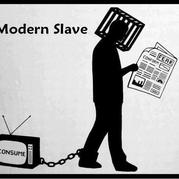
When time equals money, we are stuck in an advanced form of slavery. We must trade hours for dollars. The problem with this model is that we only have a limited amount of hours and cannot make money while we sleep.

Sandman Empire: (noun) An empire of business or real estate created passively through a joint venture or partnership between a passive money partner and an active working partner. The active working partner handles all aspects of the business and the money partner is only responsible for financial backing. The passive partner is removed from all operations and can essentially sleep; hence the word “sandman”.

Investors who can create a “Sandman Empire” can earn serious returns in a completely passive way and have unlimited earning potential: Investors who fail to create a “Sandman Empire” are limited by time, focus, management, skill sets and capabilities.

But how can one create a “Sandman Empire”?

In investing, there are two types of investors: Active Investors and Passive Investors.

Active Investors are essentially entrepreneurs. They pick their own deals, manage their operations, manage their contractors and run the enterprise. Naturally, these entrepreneurs get the highest returns possible and in many ways, they take a risk on themselves to perform and run the enterprise profitably. Active investors may or may not invest money into their enterprise. Since they invest their entire lives into the business, usually they do not have money invested.

Passive Investors are more like silent partners who park their money with an Active Investor. Silent partners trust the Entrepreneur to run the enterprise profitably. Silent Partners need to be proficient at analyzing people and deals. These Passive Investors are the ones who get the benefits of building a “Sandman Empire” if they can select the right Entrepreneur to grow their money.

Usually passive investments have lower returns than active investments. However, Passive investors can get much higher returns by partnering with an Active Investor and splitting the profits.

If a Passive Investor can find the right Active partner, the possibilities are endless. When financial backing is paired with time and talent, tremendous value and profits can be created.

However, if the Active partner is not chosen correctly, massive financial destruction can occur; including losing the investor’s capital or worse.

A Passive Investor must perform proper due diligence on their Active Partner before “taking a leap of faith” and making a final decision to place their money with him or her.

Some questions that need be answered in the due diligence period are:

1)   Does the Active Investor have experience with these types of assets?

2)   Does the AI have experience with this strategy?

3)   How do we recover if things don’t go according to plan?

4)   Has the AI lost money before? How did he or she handle the loss?

5)   What is the track record of the AI, does it show success? Is he or she hiding anything?

6)   Has the AI built an adequate team? Can the team handle the additional business that the Passive Investor is funding?

7)   How has the AI handled himself when things went wrong? Can he turn bad luck into good luck?

8)   What transparency is offered?

9)   What options does the Passive Investor have to exit if things don’t go right?

10)                 Does the AI have good relationships? Is he loyal and in what way?

11)                 What is the brand of the AI? What does he stand for?

12)                 Is the AI 100% focused and committed to the venture or does he or she have a day job? Do you want a “weekend warrior” managing your money?

13)                 What is the X-factor for this AI? What makes him the over-the-top best choice for your dollars? Are you investing in someone who takes care of the details and provides an excellent product and experience? Or just another “real estate guy”?

If an Active Investor can provide satisfactory answers to all of these questions, then he or she is a prime candidate to build a “Sandman Empire”.

Of course you will have to trust and verify all of the answers to make sure that the “walk” matches the “talk”. When it comes to money, people will say whatever they have to get your dollars. Don’t be a victim of bad due diligence, put your potential partner through extensive scrutiny, ask the hard questions and make sure that you have a competent, trustworthy partner to build your empire while you sleep.

Thanks for reading,

Stefan Aarnio

Freedomway.ca
facebook.com/stefanaarnio
https://twitter.com/stefanaarnio
http://ca.linkedin.com/in/stefanaarnio

P.S: Please share this article if you found it helpful

13 Comments

Dead Money: Does the Money you Earn Buy you Freedom or Slavery?

12/6/2012

4 Comments

 
Picture
By: Stefan Aarnio
Freedomway.ca
facebook.com/stefanaarnio
https://twitter.com/stefanaarnio
http://ca.linkedin.com/in/stefanaarnio

Remember: Please share this article if you found it helpful

If you were offered $35,000 a year to sit at a toll booth and collect change from cars crossing a bridge, would you take the job?

Or would you decline and look for the next opportunity?

What if you were paid $100,000, $200,000 or $300,000 for the same task? Would you take the job?

What if you were paid $1 a year to sit at the same tollbooth?

For myself, I would not sit at the tollbooth for any amount of money because money earned at the tollbooth is “dead money”.

We are human “be-ings” not human “do-ings”.

Daily tasks that help us become the person we want to become create life, energy and success. These tasks have purpose, feed our spirits and nourish our souls; By performing tasks we enjoy, we become the person we want to “Be”.

If a task or job does not bring us closer to the person we want to become, we earn dead money and in some ways, waste our time, effort and energy.

Eventually if you earn enough dead money, you won’t be able to get out of bed in the morning.

Dead money is a term I learned from Raymond Aaron, a New York Times best selling author. Raymond explained that the money he earned from his published books that were unaligned with his core purpose were “dead money”. In some ways, these books hurt his brand, wasted years of his life and were very expensive in opportunity cost.

In my own business, I make sure every action I do advances my career by building brand-equity or by earning cash AND brand equity. If I am able to monetize my actions and build my brand equity at the same time, I make the biggest gains in spirit and in my bank account.

My mentality is: Even if I earn $0 at the end of the year, but have built a $1,000,000 brand, I succeed. Steve Jobs paid himself a salary of $1 while he was the CEO at apple because his mission was to build the company and put a dent in the universe by challenging the status quo. I have a similar philosophy to Steve Jobs who I have idolized since 6th grade when I first learned about who he was and kept a picture of him on my desk at school.

I am fortunate enough to aware of my brand and purpose, the average person does not consider his or her brand, his brand equity, who he is, who he wants to become or where he is going in life. For the average person, this is very unfortunate.

These people are stuck in “dead end” jobs that are either high paying or low paying and every dollar they earn is a “dead dollar”. The dollars they earn do not build their dream or advance their career.

If you earn enough “dead dollars” you will eventually build the bars of an emotional prison.

Money is a medium of exchange and a currency because it needs to move in order to be relevant and useful like electricity or water.

If money stops moving, money dies.

If people stop moving for long enough, people die.

If the spirit stops moving, the spirit dies.

If you are earning money in your career, but are NOT moving towards becoming the person you wish to become, your career and spirit will eventually die.

Years ago I used to work Frito-Lay, the company that makes Lay’s chips and Doritos. I used to put chips on shelves at Wal-Mart every morning at 4:00 am and I earned a disproportionately high salary for doing so. Walmart employees stocking chips at 4:00am were making $8 per hour, I was making closer to $20 per hour to do the exact same task.

However, every dollar I earned was dead money.

The money was dead because although I was earning money daily, I was not advancing towards my goal of becoming an entrepreneur. The money was good, but my soul was dying. I was becoming a professional shelf stocker and not a professional entrepreneur. I was NOT advancing towards the person I wanted to become. The life that I wanted was not being built with my actions and consequently I was earning dead money that did not help me in my pursuit of happiness.

Many people think that earning money in itself is a good return on time, but in fact, earning dead money is a complete waste of time, waste of spirit and a waste of life.

Would you rather live a life of poverty doing what you love or a life of riches in a life of indifference?

Most people will say that they would rather do what they love and live in poverty. However, 70% of people are not happy with their current jobs or current careers.

70% of people earn dead money every day.

A wise man once said “Talk is cheap and money buys the whiskey.” What this wise man is saying is that most people say whatever makes them sound good: “I would rather do what I love” but their actions do not align with their words.

Remember: Talk is cheap and Money buys the whiskey.

I’m not saying that we should choose a life of poverty out of passion to pursue what we love. I’m a firm believer that we can “have our cake and eat it too”.

I think it’s 100% possible to do what you love, monetize it and become rich. 

I believe you can have it all, happiness, love and money. When it comes to happiness, love and money; there is always enough for everyone.

Obtaining happiness and money is a topic of major study for myself at this time in my life. What I find is that the more I love my career, the more I love my daily routine, the more fun I enjoy, and the more money I make.

Fun = money.

Love = money.

Enthusiasm = money.

Money = life.

The more fun, love and enthusiasm I enjoy, the more life I have, and my wallet benefits as well.

I have abandoned the pursuit of “dead money” and if a task or job doesn’t line up with my mission, my vision and who I want to become, I will not perform it.

Do what you love and the money always comes.

Complete the mission and the money always comes.

Provide enough value and the money always comes.

Money is a result of a job well done; it is an effect, not a cause. Actions performed at a level of excellence equate to money earned. Money itself can never motivate someone to be better, achieve excellence or create more value because money intrinsically has no value.

Money is intrinsically dead, we are the ones who breathe life into money. People are the ones who attach external value to money and we use it to build our dreams.

Money is neutral and money doesn’t care. Money doesn’t cry for you when you are sad and money won’t drink champagne with you when you want to celebrate.

Money will, however, buy you a bottle of champagne.

Money can either be alive or dead depending on how we earn it. It is up to us as the wielders of money to respect the neutrality of money, breathe life into money and allow money to flow through us in our personal pursuit of happiness.

Money, life, spirit, happiness, enthusiasm and joy are all currencies and we must allow them to flow.

If we allow money, life, spirit, happiness, enthusiasm and joy to flow through us, we will become congruent. We will prove our integrity and the universe will reward us for respecting it’s laws and creating abundance.

If we shut off our spirit, enthusiasm and joy, then we also deactivate the spiritual power of money and the power of life.

If we deactivate the spiritual power of money, the money we earn will die the moment it touches our hands. Instead of using our earned money to build our dreams, our dead money will build an emotional prison around us where we are forced into slavery for the all-mighty dollar.

When we align with the person we want to become, we earn the Midas touch and everything we touch turns to gold. When we are out of alignment, we earn the touch of death.

Ask yourself; do my daily actions help me become the person I want to become? Am I earning dead money? What is my purpose? How am I achieving my purpose?


We all have the Midas touch if we can find our purpose deep down inside of ourselves. Respect money as a tool; respect the neutrality of money and the power of money. Allow money to live and money will let you live the life of your dreams.

Disobey money, kill money and you will find yourself in financial prison. Don’t let money die.

Protect money and it will protect you.

Thanks for reading,
Stefan Aarnio

Freedomway.ca
facebook.com/stefanaarnio
https://twitter.com/stefanaarnio
http://ca.linkedin.com/in/stefanaarnio

P.S: Please share this article if you found it helpful

4 Comments

Poverty Sucks: The top 5 Reasons Why you need to become rich in the next 10 years.

12/5/2012

0 Comments

 
Picture
By: Stefan Aarnio
Freedomway.ca
facebook.com/stefanaarnio
https://twitter.com/stefanaarnio
http://ca.linkedin.com/in/stefanaarnio

Remember: Please share this article if you found it helpful

In North America, the middle class is quickly becoming an endangered species.

In many ways, opportunity for middle income jobs is disappearing quickly as the jobs migrate overseas to India, China, Brazil and other up and coming economies.

In both Canada and the USA, we are quickly becoming a third world country.

The best definition can find for a third world country is: A country where there is no middle class – only rich and poor.

There are many factors that threaten and endanger the middle class, some of which are:

1)   Unions and inflated labor prices in North America that keep the USA and Canada from competing on the world market

2)   North American consumer demand for the lowest possible prices of consumer goods aka: Wal-mart. North American consumers will not pay premiums for locally produced goods.

3)   The death of American manufacturing

4)   The Federal Reserve, Quantitative easing and inflated money supply

5)   Rising oil, food and real estate prices as a result of Quantitative easing.

6)   Rising minimum wage while middle income earners have stagnant earnings

7)   Technology that eliminates certain jobs every year, ie: Clerical jobs replaced by automation.

8)   Rising taxes and fiscally irresponsible governments

All of the above factors are a threat to the shrinking middle class and as the world becomes more global, many more middle-income jobs will disappear.

Why hire an assistant in Winnipeg for $12-$15 per hour when you can hire a virtual assistant who speaks perfect English with better education in the Philippines for $1.50-$4 per hour?

An MBA graduate in the USA costs a company $300,000 a year while the same MBA graduate from India costs $30,000 a year.

The world is changing rapidly and, for many, it is time to make a decision between joining the ranks of the rich or poor.

Eventually, there will be no middle ground in the North American economy. If a person wants to keep living a middle class lifestyle, he or she may have to move to Brazil.

If given the choice between living rich or poor, everyone always says they would choose to be rich. However, when you survey the actions of the average person, it is quickly evident that most people choose  a life of poverty over a life of wealth.

The top 5 reasons why “Poverty Sucks” and why you need to be Rich in the next 10 years.

1)   You don’t get what you want in life: People who choose a poverty mindset over a wealth mindset ask themselves “what is the cheapest thing I can afford?” For these people, life is controlled and dictated by prices – not value. When you go to a restaurant for dinner, do you order the cheapest thing on the menu? Or do you order what you actually want to eat?

2)   Lack of Freedom: When you have a poverty mindset, other people make critical decisions for you. Most people are 100% controlled by their government and their employer. If you want the freedom to make your own decisions, it may be time to build a wealth mindset. Every great experience in life has a price of admission, if you want the experience, you have to pay for it. America’s jails are filled with people who have absolutely no freedom. Most American prisoners made less than $10,000 per year before entering the prison system. When you are impoverished, you are stuck in survival mode and cannot get into “creation mode” where you can freely create wealth and the life you want.

3)   Lack of confidence and health: Lack of funds creates stress. Everything in life is difficult if you cannot pay the price of admission. Stress is a major threat to health and wealth. Lack of funds also creates a lack of confidence, which can be a vicious cycle. No funds equals no confidence and no confidence equals no funds. If you are in this cycle, break it immediately.

4)   Broken Homes: The #1 cause of broken homes and divorce is financial stress. Financial infidelity aka: hiding bank accounts, secret spending and secret credit cards ruins trust and relationships. Divorced families are much more likely to be faced with poverty and financial problems.

5)   Debt: Nearly 50% of the families in the USA are 1 paycheque away from bankruptcy. We live in a paycheque to paycheque society where overspending and money mis-management makes debt a necessity for survival. Today with credit cards, it’s easier than ever to get into debt. Although debt is a convenient way to take care of immediate problems, it is a double-edged sword. Debt will let you do the things you want today while robbing you of the things you want in the future.

All of the above reasons can create cycles of poverty that are very difficult to break.

Unfortunately, in the future, there will only be rich and poor in North America unless some major changes are made. I have heard many experts say that next 10 years will be the biggest wealth transfer in history and best time in history to become very rich... or very poor.

The USA is in a recession that may turn into a depression and this means that businesses, real estate and other assets will be on sale. There will be more opportunity than ever to become wealthy.

The best part of living in a free country like the USA or Canada is that each of us has the ability to choose between becoming Rich or Poor.

Thanks for reading,

Stefan Aarnio

Freedomway.ca
facebook.com/stefanaarnio
https://twitter.com/stefanaarnio
http://ca.linkedin.com/in/stefanaarnio

P.S: Please share this article if you found it helpful

0 Comments

Lions vs. Gazelles: Both are running, but who would you rather be?

12/3/2012

3 Comments

 
Picture
By: Stefan Aarnio
Freedomway.ca
facebook.com/stefanaarnio
https://twitter.com/stefanaarnio
http://ca.linkedin.com/in/stefanaarnio

Remember: Please share this article if you found it helpful

“Every morning in Africa, a gazelle wakes up, it knows it must outrun the fastest lion or it will be killed. Every morning in Africa, a lion wakes up. It knows it must run faster than the slowest gazelle, or it will starve. It doesn't matter whether you're the lion or a gazelle-when the sun comes up, you'd better be running.” – Christopher McDougall

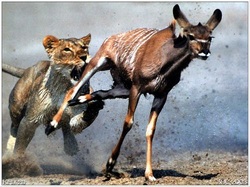
In every market whether business, jobs or investing, there are lions and there are gazelles. The lions are the fastest, strongest, fiercest animals in the field while the gazelle is a fast, light, pack animal that finds safety in numbers.

The lion represents the leader in the market: he feeds on his competition and swallows up the slowest weakest gazelles. There are few lions, and only the best can become lions in the field.

The gazelles symbolize the “herd” of average players that flood the market and swarm the terrain in packs. Where one gazelle goes, the rest follow.  Unlike the few lions on the field, there are scores of gazelles. As a gazelle, you do not have to be the best to survive. Instead, you must only be faster than your slowest competition to win another day of life.

The lion requires a complex skill set and a high standard of performance to live, He must become strategic while hunting and move contrary to the direction of the herd. He must appear where the herd does not expect him if he is going to kill and live another day.

The gazelles only need an average skill set and average standard of performance. The herd feels secure when everyone is the same and the gazelles organize themselves in a crowd. The crowd makes the gazelles feel safe because it gives them a thin veil of protection from the lions. This thin veil keeps the lion from focusing on any one gazelle, for the lion cannot catch them all. The lion can only catch one gazelle for his dinner and let the rest of the herd go. The gazelles know this and they base their survival strategy around this fact.

As an investor or entrepreneur, which would you rather be? The Lion or the Gazelle?

Would you rather have the illusion of safety and move with the herd as a gazelle?

Or would you rather have the freedom of the lion to hunt and kill on your own terms?

In my investment/entrepreneurial career, I have always chosen to become the lion.

In my opinion, the lion is a better choice in the investment/entrepreneurial world because I have always had a rule for myself: Whatever the average person does – do the opposite of it and you will succeed.

Most people are not successful at all, so if you do the opposite of the average person, logically you will be a success.

If the average person wants to buy, then sell.

If the average person drinks, then don’t drink.

If the average person smokes, then don’t smoke.

If the average person has a 60-inch plasma screen TV, then don’t own a TV.

If the average person has a PC, get a mac.

If the average person doesn’t exercise, then exercise.

The formula is quite simple and it works more often than not.

People are pack animals, much like gazelles. As mammals, we flock and freeze when we are scared. We form packs to feel safe and we want to belong to a group.

Unfortunately, groups don’t know how to make decisions or create good ideas. Decisions and ideas come from an individual and never a collective.

A committee of professionals built the titanic while one man built the Ark.

No matter which subset of the world or the market you look at, there is always a majority and a minority.

Pareto law states that 20% of your actions create 80% of your results. This relationship applies to markets and people as well. 80% of the market is dominated by 20% of the players.

In the case of the lion and the gazelle, it would be more skewed. Perhaps the lions as 5% of the animals control 95% of the gazelles.

In America, 1% control 99% of the world. This is exactly the same concept as the lions and the gazelles.


The question is, why would anyone want to be a gazelle when you could be a lion?


The truth is, most people are not lions because it’s easy and convenient to be a gazelle while it is extremely difficult to become a lion.

The gazelles have safety in numbers; they do not have to be fast (just faster than the competition), they can feed on grass, which is plentiful and at the end of the day they can go to sleep with a belly full of grass. They don’t have to worry about hunting and killing because they can graze all day. Gazelles know that tomorrow will be the same easy routine and find security in the herd.

Lions on the other hand hunt alone or in very small groups. They have to be much faster than the slowest gazelle or they starve to death. Lions cannot eat grass like the gazelle and require meat survive. Every day the lion must be tracking and hunting for his next kill.  If the lion fails to kill a gazelle, he goes to bed with an empty stomach and too many empty stomachs in a row means death for the lion. The lion has no security and must be better than the gazelle to survive.

To be a gazelle is to be average.

To be a lion is to be a champion, a performer and an athlete.

Every day, both the lion and the gazelle are running, to survive. But what makes the two animals different is “who” they must be on a daily basis to survive.

In every business, every industry and every market, there are lions and there are gazelles.

Every morning when you wake up, you must make the choice between running the field as a lion or a gazelle. No matter which one you choose, you are going to be running anyways.

Are you committed to being the best in your field and taking the lead as the lion? Or would you rather blend into the crowd and take your chances as a gazelle?

In the end, it doesn’t really matter which animal you are. Either way, you will be running. But if you’re running anyways, you might as well choose excellence and learn to be the lion.

Thanks for reading,
Stefan Aarnio
Freedomway.ca
facebook.com/stefanaarnio
https://twitter.com/stefanaarnio
http://ca.linkedin.com/in/stefanaarnio

P.S: Please share this article if you found it helpful


3 Comments

Risk Tolerance: How do you personally define risk?

11/30/2012

1 Comment

 
Picture
By: Stefan Aarnio
Freedomway.ca
facebook.com/stefanaarnio
https://twitter.com/stefanaarnio
http://ca.linkedin.com/in/stefanaarnio

Remember: Please share this article if you found it helpful

In life, there is no such thing as a guarantee.

Everything we do always has an element of risk, however, we do not consider every day things like driving to work or crossing the street to be “risky”.

Today I googled “the definition of risk” and this definition came up from thefreedictionary.com:

risk  (rsk)

n.

1. The possibility of suffering harm or loss; danger.

2. A factor, thing, element, or course involving uncertain danger; a hazard: "the usual risks of the desert: rattlesnakes, the heat, and lack of water" (Frank Clancy).

3.

a. The danger or probability of loss to an insurer.

b. The amount that an insurance company stands to lose.

4.

a. The variability of returns from an investment.

b. The chance of nonpayment of a debt.

All of the definitions above involve some form of loss, hazard, suffering and an element of variability, probability or chance.

What I find to be interesting about risk is that every single person I meet has a different subjective definition.

Often, when I am discussing risk with another investor, I will ask what their personal definition of risk is.


More often then not, investors will define risk as the chance or probability that he or she loses on an investment.

This definition is sufficient, but I find it to be a very unsophisticated definition of risk.

Robert Kiyosaki says that intelligence is the ability to make distinctions. The more distinctions we can make, the more intelligent we are.

For example, there are over 7500 variations of apples in the world. When it comes to apples, I am not unsophisticated and can only name a few variations: red delicious, granny smith, crab apples, and Macintosh. When it comes to apples, I am very unintelligent. A person who can name 100 variations of apples is much more intelligent than I am on the subject of apples.

When I hear a person’s definition of risk, I can immediately find out what their sophistication level is when it comes to business and investing.

My personal definition of risk has changed many times throughout my life. I used to believe in luck, and now I do not. All I believe in is actions performed and numbers. Life and business are a numbers game, if you can produce the volume and hit the numbers, you will succeed every time. There is no luck.

My definition of risk is:

Risk: Take an inventory of the elements that are under your control and compare them to the elements that are out of your control. Then ask yourself: am I ok with this? If you are ok, then proceed with the risk. If you are not ok with the degree of control, then do not proceed.

My definition of risk has two primary distinctions that the average person’s definition does not:

1)   My definition of risk assesses your degree of control in a situation

2)   My definition asses your emotions and how you feel about your level of control

Notice that I eliminate “probability” or “chance” from my definition of risk. In my world, there is no such thing as probability because failure is not an option.


Naturally, there are things that can happen outside of my control, and I must address and mitigate all contingencies before proceeding. Should something outside of my control become an issue, the question is: how do we recover form this position?

In my world, I understand that in life and in business, plans fail, people fail, systems fail, markets fail and what is more important than relying on all these imperfect elements is to understand how to recover and “fix” the failures.

I build failure and multiple contingency plans into my ventures and understand that failure and recovery is part of the game.

In real estate, between 5% and 10% on the balance sheet will be factored in for vacancy on multi family buildings.

Restaurants and traditional businesses will build theft into their balance sheets.

Sophisticated business people understand that failure; loss and recovery are all part of doing business and factor it in to their projections and balance sheets in advance.

My definition understands that there are elements in our control and out of our control. There is no luck; only degrees of control. If you are ok with your degree of control, then proceed with the “risk”.

Of course, there is always that moment where we must “take a leap of faith” and no amount of due diligence can protect us from the elements that are out of our control.

What is most important when entering an endeavor with risk is to ask ourselves “how do we escape if we want to exit?”

For myself, I love real estate because no matter how bad things go, there is always a large tangible asset attached to the venture that can be liquidated to recover my investor’s capital.

Again, we come back to elements under control and elements out of control.

When raising capital from an investor or considering a “risky” venture take them through the following scenarios to asses if the venture is right for them:

1)   The best case scenario – everyone loves this scenario, and it rarely happens.

2)   The realistic scenario – this is the likely outcome

3)   The worst case scenario – this is second most likely scenario

4)   The nightmare scenario – this is as bad as it gets, you don’t want to find yourself in the nightmare scenario.

For myself, I have a low risk tolerance and I always say to my capital partners “if you are ok with the nightmare scenario, then we are ok to do business”

At the end of the day, risk is all about emotions. If we are emotionally ok with our degree of control in the risk and how the nightmare scenario would affect our life, then we are ready for the risk.

If we cannot handle the elements out of control and would not be able to live with the nightmare scenario, then the risk is not for you.

There is a famous saying “nothing ventured, nothing gained” and we must all take calculated risks in our pursuit of success. The question is, after exploring a few definitions of risk, how do you personally define risk going forward?

Your personal definition of risk is extremely important because it will define which risks to take and which ones to avoid. To paraphrase Sun Tzu, know yourself and know your enemy and you will be victorious in every battle.

Thanks for reading,

Stefan Aarnio

Freedomway.ca
facebook.com/stefanaarnio
https://twitter.com/stefanaarnio
http://ca.linkedin.com/in/stefanaarnio

P.S: Please share this article if you found it helpful


1 Comment

Vision: Laying Brick or Building a Cathedral?

11/27/2012

2 Comments

 
Picture
By: Stefan Aarnio
Freedomway.ca
facebook.com/stefanaarnio
https://twitter.com/stefanaarnio
http://ca.linkedin.com/in/stefanaarnio

Remember: Please share this article if you found it helpful!

Two men are laying brick, and one man is miserable. He lays brick after brick and curses each brick as it’s laid upon mortar. The other man is excited and filled with joy to be laying the exact same brick.

What makes these two men different?

One man has vision: he is building a beautiful cathedral.


The other does not: he is merely laying brick.

These men are identical men, performing an identical task in an identical way, but one is energized and overjoyed while the other miserable and depressed.

I recently hired a coach to take my life and business to the next level. The first thing my coach had me do was fill out my “vision” board. I was unprepared for a vision board because I had not spent much time creating a vision for my business and myself.

After being assigned to create a vision, I started to spend serious time to thinking and took action to construct the vision that will fuel my life and my business.

What do I want my life to look like? What do I want my home to look like? What do I want my health to look like? What do I want my bank account to look like? What do I want my workday to look like? Etc.

The list goes on.

Vision is so powerful because once we have a great vision, we can literally reverse engineer our reality from the blueprints of a great vision.

Just like the two men, one can see the lines of a cathedral in his vision and he feels like he is contributing to a larger mission and a beautiful creation.

The other man can only see bricks and mortar. Each brick he lays is painful, his body is exhausted and he works like a slave.

Which man would you rather be?

After becoming more conscious of vision and spending some time to create my own “vision plan”, I feel like I can no longer offer advice to the people who ask me for advice.

When someone asks me for advice, I always ask, what his or her vision is.

It startles me to find out that very few people have visions for their lives. Most people are satisfied with just laying brick. Only a very select few are building a cathedral.

Many people have goals, hopes, and dreams but few have a vision. The vision, in many ways is more far more powerful than transactional goals, baseless hopes and action-less dreams.

The reason why I prefer a vision plan to all of the above is because a vision can be reverse engineered into actionable steps that can be executed each day.

Goals are often one-dimensional, hopes are for the hopeless and dreams are for dreamers. However, a strong vision that has been reverse engineered into daily actionable steps is unstoppable.

We must create the vision of our cathedral and then begin laying brick – one brick at a time.

If we are consistent and persistent in our “bricklaying” actions, eventually our Cathedral will begin to manifest and the vision will come to life.

The people with the strongest visions are the leaders in all facets of life. Visionaries like; Steve Jobs, Gandhi, and Henry Ford all saw the world differently and worked towards their vision.

Through a powerful vision, reverse engineering of that vision into a blueprint, and execution of the small actionable steps of the blueprint, the world can be changed one “brick” at a time.

The future belongs to those of us with strong visions, clear blueprints for achieving the vision and a specific plan of daily actionable steps.

In your life today, are you laying brick or building a cathedral?

Whose cathedral are you building? Your own? Or someone else’s?

Thanks for reading,

Stefan Aarnio

Freedomway.ca

facebook.com/stefanaarnio

https://twitter.com/stefanaarnio

http://ca.linkedin.com/in/stefanaarnio

P.S. Please share this article if you found it helpful!


2 Comments

Why the Best Deals are created and Cannot be Bought.

11/19/2012

0 Comments

 
Picture
By Stefan Aarnio
Freedomway.ca
Facebook.com/stefanaarnio

Photo: 40 Wall Street, The Trump Building by Donald Trump. Bought for 1 Million dollars, valued today at 400 Million dollars.

Remember: Please share this article if you find it helpful!

Almost every day I get asked by one person or another; "how do you find great deals?"

My answers are always vague:
  1. Deals come from ads I put up
  2. They come from my network
  3. They come from bird dogs or wholesalers
  4. Inside connections with centres of influence
  5. Deals come from my blog
  6. Or one of my realtors

Every week I look at more than a dozen deals and send out offers. I keep very active and can often get great discounts or no money down deals that are not offered to the general public. 

HOWEVER

Just because a deal is no money down or at a "discount" doesn't mean that it's a good deal.

The truth with deals, whether in real estate, business or dating is that they are often cherry picked before you get access to them and the best ones are usually taken.

Even a private deal goes through at least a dozen sets of eyes before it gets to you privately.

If a deal is so great, then why hasn't anyone bought it yet?

The answer to the question is: There is no such thing as a good deal because - the best deals are created, not bought.

The formula for a great deal is simple:

  1. Find a great opportunity
  2. Add value
  3. Collect profit

The key with this formula is step #2.

Adding value is the hardest part of this cycle and figuring out how to maximize the opportunity takes the most skill.

I would estimate that the average person gets 8 great opportunities every day (real estate or just personal life opportunities). However, it takes a certain pair of eyes to recognize the 8 opportunities that fall into our laps and a very sharp skill set to add value and collect profit.

At the stage I'm at in my career, I have deals coming to me daily and the biggest challenge I have is figuring out which ones to pursue and which ones to drop.

When evaluating deals, I ask myself: which opportunity can I force the most value out of? Which deals take too much time or effort? Which deals can be done the fastest? Which deals will align with my mission in the best way?

Often i have found that the more creative I can get with a deal, the higher my profits go. However, just because I get creative, doesn't mean that I am ensured a profit.

There are many times when creativity doesn't work, we have to be very careful and look at creative approaches with a sober second look.

The questions I always ask when someone approaches me with a deal is:

  1. Why is this a good deal?
  2. What is everyone else failing to see?
  3. What mistakes did the vendor/seller make?
  4. What is my unfair advantage with this deal?
  5. How can I maximize my profits?
  6. How fast can this deal be done?
  7. What is the effort required on my part?
  8. How safe is my partner's capital?
  9. What threatens my position in this deal?
  10. Can I negotiate further on the price/terms?
  11. How can I get creative with this deal and make it even more valuable to me and my organization?
  12. Can I repurpose this deal and sell it to another audience (rezone, repurpose, assembly, commercial/residential)?

The wonderful thing about real estate is that there is a very high degree of control.

A real estate entrepreneur controls just about every aspect of a deal and value can be created in an infinite number of ways. 

I was at a Real Estate trade show this weekend and looked at 40 different real estate companies who were promoting their products and their deal inventory.

I was very impressed with the creative and innovate ways that the 40 different companies were able to find unique and innovative ways to create deals, create value and in turn, create profit.

The ability to create a deal is an entrepreneurial skill that very few people are actually competent at.

When I think of a person who can create a deal, I think of Donald Trump. If you study Trump, you will find that almost every one of his deals is created, engineered and highly innovative.

Every deal is different and he can see value where no one else can see it.

One deal that comes to mind is 40 Wall street that Trump bought for 1 million dollars and is now worth close to 400 million dollars. Some people say that it is the best real estate deal of all time.

Most real estate entrepreneurs make amazing returns when they double the value of a property. Through creativity and deal engineering, Trump was able to increase the value of the property by 400 fold.

What deal can you multiply the value by 400? I do not have the skills to create a deal like that yet, and very few people in the world have a skill set like Trump. This is why Donald Trump is a billionaire and the rest of the world is not.

When you are analyzing a potential deal, think of the ways that you can "create" a great deal where most people fail to see a profit.

The best deals of all are missed opportunities that are often obscure and mis-marketed.

Get a hold of a mis-marketed opportunity, create value and reap the rewards. The formula is simple.

Thanks for reading,
Stefan Aarnio
Freedomway.ca
facebook.com/stefanaarnio
https://twitter.com/stefanaarnio
http://ca.linkedin.com/in/stefanaarnio

P.S. Please share this article if you found it helpful!

0 Comments

How to Profit from Failure: Turn Lemons into Lemonade

11/18/2012

1 Comment

 
Picture
By Stefan Aarnio
Freedomway.ca
facebook.com/stefanaarnio

A wise man once said "when life gives you lemons, make lemonade."

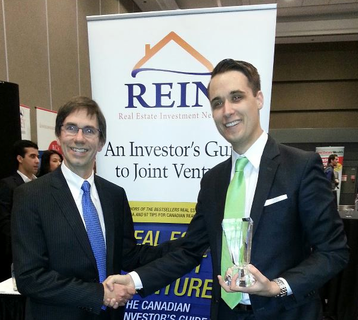
Today was an exciting day in my life. Less than a month ago, I was nominated for Joint Venture Partner of the year in the Top Investor Awards by Canadian Real Estate Wealth Magazine. Competing in my category were 5 other very competent investors, all of which I admire greatly.

I had a fair amount of time to think about the strategic possibilities of my nomination and ran through all of the possible scenarios that such recognition would bring.

My competitors were all very successful investors, and depending on the metrics used to determine a "winner", any one of us could have won the award.

Three ways to determine a winner would be:

1) The winner could be determined by dollar volume, in which I would certainly NOT be the winner.

2) The winner could be determined by profits, in which I would certainly NOT be the winner.

3) Or the winner could be determined by story, in which I would have a chance to win.

I had to prepare myself for two scenarios:

  1. A scenario in which I win
  2. And a scenario in which I do not win

It is truly an honour to be nominated alongside such successful investors and the nomination alone is worth a tremendous amount of value to me.

I thought about the two scenarios above for a long time and determined that I would rather lose to a champion than win over an inferior competitor.

In my head, I created a no-lose scenario.

I would either win the award and run with the temporary boost to my brand/marketing or lose and still run with the temporary boost to my brand/marketing.

The only way to create a no lose scenario is by learning to create profit from failure.

I have failed in my life more times than I have succeeded.

They say that the formula for failure is to try to please everyone.

The formula for success is to take your current rate of failure an double it.

I have doubled my rate of failure many times over and continue to  increase my quota. I am not afraid of failing because when life gives me lemons... I have learned how to squeeze out a delicious glass of lemonade.

I have made lemonade so many times in my investing career that I could open up a lemonade stand.

Although, I have had many chances to wrestle with failure, many people have not had the luxury of having so many experiences to study and learn from failure.

The school system conditions us to avoid failure at all costs. In school, we treat failure like the same way we treat death: if you fail, you don't get good grades, you can't get into a good university, you can't get a good job and you will starve to death on the street because you have no money.

In many ways, we are learned to treat failure like death.

In reality, failure is the essence of life.

We learn our greatest lessons when we fail and often, we use these experiences to craft our identities, our character, our philosophies and our stories that make us into champions that can press forward against all odds.

My thinking has changed dramatically over the years when it comes to failure.

I used to get upset when I failed. However, I no longer get upset. When I fail in my current endeavours, I identify and correct my mistake as fast as possible. I then ask myself, "how can I prevent this in the future?". Failing is no longer a negative emotion for me, in fact, I get excited to fail now because it means that I will get an opportunity to learn a lesson. Lessons make me smarter and increase my chances of winning in the future.

FAILURE MANAGEMENT 101

Imagine you are an olympic athlete for an obscure sport like Javelin in which you take a running start to throw a single spear as far as possible.

You train for 10 years, put in 10,000 hours plus of training, forgo sex, good food, alcohol, sleep, professional career opportunities, children, money and lifestyle for a chance at winning the olympics.

The day of the olympics comes and you get one chance, one throw and in that moment you will become one of two things:

  1. A winner, a medalist and you will become immortalized in the olympic hall of fame
  2. A nobody, you do not qualify, you miss the distance required by inches and your javelin efforts vaporize into thin air

On monday morning, when you get back to your home, what do you do when you sit down at the kitchen table and ponder your next move?

Had you achieved success, you would have got a sponsorship, a great career opportunity, recognition, and fame, etc.

However, you failed... What next?

How do you make lemonade out of the lemons?

How can you create success from the experience?

I have been in situations like this many times. Life is a performance based sport, you often only get one chance to make something happen and if you don't, how do you deal with it?

It's not what happens to you in life that matters, it's how you deal with it.

Today when I was waiting for the speaker at the podium to announce the winner of the Joint Venture Partner of the Year award I had fully prepared myself for failure.

I desired success, understood that it was possible, but the final decision was out of my hands - I did not worry.

In hindsight, I was 95% prepared for failure and only 5% prepared for success.

I was shocked to learn that I had won the award and did not have a speech ready. I winged a few words at the podium, thanked everyone I could think of and proceeded with my "success plan" that I had to quickly engineer.

I was so convinced that my competition would win the award that I had given up the idea of success. To avoid disappointment, I had created a plan to deal with failure and had a solid plan to create an asset out of failing to win.

I have become so good at losing and dealing with situations that go wrong that I had forgot to plan for situations that go right.

Getting good at losing, however, is one of the major pillars of success. It helps us take risks and allow us to win - even when we lose.

Life becomes very easy when you can find ways to win from failure, especially when we learn to monetize these situations.

When I think about the Joint Venture award that I won, I am convinced that my story is what captured the judge's imaginations.

I did not have the biggest deal, the biggest profit, the highest dollar volumes or the sexiest deal.

However, I had a great "rags to riches" story that explains my investment career. My story for 2012 begins with failure and ends with success.

Most people give up when they fail, I have learned to push through failures until I can turn them into successes.

In your own life, learn to spot the "good" in the "bad" and package it into a marketable asset that you can use to your advantage.

Failure is a necessary ingredient to success and many people do not understand that success comes in cycles and is more like a wheel than a destination.

Picture the ferris wheel at the local fair. When you are at the top of the wheel (success), the only way to get back to the top (success) is to go through the bottom (failure).

Life is much like a ferris wheel: to get the top, we must rotate through the cycles at the bottom.

In the words of Napoleon Hill "Every adversity, every failure, every heartache carries with it the seed on an equal or greater benefit."

Learn to find these seeds, plant them, water them and watch them grow.

Jack and the Beanstalk is one of my favourite stories that perfectly describes my life so far.

  1. Jack trades his mother's cow for some "magic beans"
  2. Jack brings the beans home to mother who curses him and throws them out the window to spite him
  3. The next morning, a huge beanstalk has grown into the clouds and jack decides to climb up the beanstalk
  4. Jack finds a giant in a castle in the clouds
  5. Jack slays the giant
  6. Jack climbs down the beanstalk with the princess (his woman), the golden harp (his calling) and the golden goose (his ability to make money)
  7. Jack began his journey as a boy and becomes a man through the process

Although Jack is successful in the story, he begins with failure. He traded his mother's last milk producing cow for 3 magic beans. The beans have no intrinsic value, his mother believes he has made a bad trade and in her anger, she throws the beans out the window. After the beanstalk grows from the magic beans, Jack climbs into the clouds, goes through a series of trials and becomes a successful man.

My investing career has been the same way and my first 2 years in the business were a series of very tough trials that could have easily become fatal failures. 

However, through persistence and tenacity, I have always found ways to turn failures into successes. Every time I have failed, or experienced a set back, I have been successful in converting failures into greater successes and have become consistent in my results.

The next time you fail, look for the opportunity to create an equal or greater success. 

I have become better and better at this skill with each time I practice it. 

In my lifetime, I aim to become a master of "failing" so that I will constantly be in a "no lose" situation. Life truly is a "no lose" game if we approach it with the right attitude and the right level of creativity.

"Empty your mind, be formless, shapeless - like water. Now you put water into a cup, it becomes the cup, you put water into a bottle, it becomes the bottle, you put it in a teapot, it becomes the teapot. Now water can flow or it can crash. Be water, my friend" -Bruce Lee

Thanks for reading,
Stefan Aarnio
Freedomway.ca
facebook.com/stefanaarnio
https://twitter.com/stefanaarnio
http://ca.linkedin.com/in/stefanaarnio

1 Comment

The Terror-barrier: Why we don't change

11/15/2012

4 Comments

 
Picture
By Stefan Aarnio
Freedomway.ca

Remember: Please share this article if you find it helpful!

Yesterday I had the pleasure of giving a talk to a group of 50 local real estate investors in Winnipeg. The subject of the talk was "how to raise capital and take the limits off of your real estate investing career."

In business, raising capital is the #1 skill any real estate investor or entrepreneur needs to be in business. So many entrepreneurs fail because they can’t get funding for their businesses initially or they can’t expand to a profitable level.

While I was giving the talk to the 50 investors in the room, I was shocked by the following:

  • 0 people claimed that “Sales and Marketing” was their #1 skill
  • 0 people had raised capital for a “no money down” joint venture (1 person may have raised his/her hand, but wasn’t confident so I wasn’t sure)
  • 0 people had a “Capital Raising” binder/presentation ready to show to investors

Many of the investors in the room have purchased at least one or more investment properties in the past few years, but were still using their own cash and credit.

Statistically, most seminars have a 2% success rate. In any given room of 100 people , 2 people will apply the knowledge they are learning and 98 will fail to apply anything.

Statistically speaking, out of the 50 people I was speaking to, 1 will apply the knowledge shared, 49 will not.

Yesterday, there were many real estate investors in the room who wanted to take their businesses to the next level. I think most of the audience in the room saw value in learning how to raise capital. Most investors want to use“other people’s money” to purchase investment properties, but many do not know how to do it.

Although, what I was teaching was the "missing piece of the puzzle" for many of the people in the audience:

  • 0 people approached me after the event for any for of help or advice.

Perhaps I gave a bad talk.

Perhaps not.

I did receive numerous compliments on the content and delivery of the speech and I think the audience enjoyed the presentation for both entertainment and content.

More often then not, when I attend a seminar, talk or presentation, I approach the speaker after the event to

  1. Thank them for speaking and
  2. inquire about how I can learn what they had to offer (whether I can afford it or not)


My primary objective with attending a seminar, talk or presentation is to learn something and find a way to bring change into my life.

Why don’t we change?

Why don’t we take action? 

Why don’t we pursue freedom at all costs?

The answer is simple.

A wise man once said “everything we want is on the other side of fear.”

Some call this invisible wall of fear the “terror-barrier”. 

The Terror-Barrier is the only thing that keeps us from having what we want in life.

In my life, the terror barrier has held me back many times, and the only way I could break through it was by getting myself in a “no options” situation.

For change to occur, the pain of staying the same has to be greater than the pain of making a change.

People are mysterious creatures and I find that we are all motivated more by pain than by pleasure.

The average person will go to great lengths to avoid pain but will do very little to achieve joy or pleasure.

There are two decision making centers in the body:

1)   The head (The brain)

2)   The body (made up of the gut and the heart)

All thoughts pass through the head, but all actions are made through the body.

There are 4 phases of change and only in phase 4 do we achieve freedom.

Phase 1)

In phase 1, we have an “old idea” in our head, and our body (who controls the actions) performs the “old actions”.

An example of this would be a person who says: “I’m a smoker” and as a result; he or she smokes regularly.

Phase 2)

In phase 2, we get a “new idea” in our head, but our “old idea” co-exists with the "new idea". The body, who controls our actions, still acts on the “old idea”.

An example of this would be a person who says “I’m a smoker, but I’d like to quit” and as a result; they smoke regularly and show no actions that indicate quitting.

Phase 3)

We get a “new idea” in our head, and our “old idea” co-exist. The body who controls the actions acts on both the “new idea and the “old idea”.

An example of this person who says “I’m a smoker, I’d like to quit” and as a result; this person will smoke sometimes and quit sometimes.

Phase 4 is where freedom and change happen. However, few people achieve phase 4 of change because they are held back by the Terror-barrier.

The terror-barrier is a fancy way of saying “irrational fear” and the cure for fear is a disciplined, rational approach or "the luxury of no options".

However, I know first hand how hard it is to break through the barrier and in my own life, I have most often penetrated the Terror-barrier against my will.

The Terror-barrier is so strong for most people that they will never change unless they experience a divorce, job loss, large financial loss, bankruptcy, cancer, death or deadly illness.

These catastrophic life experiences push you through the terror barrier because most often “the worst” has already happened.

Once we have experienced "the worst", we become free of fear. We suddenly play the game with nothing to lose.

Usually people in these very uncomfortable situations have “the luxury of no options” and become very successful after failing. 

Phase 4)

In Phase 4, we achieve freedom. We have a “New idea” in our head and the body, who controls our actions, acts on the “new idea” only.

An example of this would be a person who says “I’m quitting smoking” and as a result, they quit.

Change is never easy, but it’s a necessary process in life. 

Einstein used to say “change is the only constant in the universe”. 

Learning how to adapt and change ourselves according to the fluctuating conditions of life is the new primary skill set in this modern world. 

This skill set is especially valuable in the new economy that we live in today.

In the past, a man or woman could count on having a career from college to retirement. Today, young people change career paths every 4 years or less.

The future does not belong to the fastest, strongest, best looking or smartest. It belongs to those who can change the fastest and re-adapt to surroundings as external change occurs.

In the information age, we experience accelerated change at an unprecedented rate and learning to change will be #1 skill set in the very near future.

Thanks for reading,
Stefan Aarnio
Freedomway.ca

P.S. Please share this article if you found it helpful


4 Comments

The Luxury of No Options

11/12/2012

0 Comments

 
Picture
By Stefan Aarnio
Freedomway.ca

Remember: 
Please share this article if you found it insightful.

"The grass is always greener on the other side, until we get to the other side and realize that the other side requires watering and maintenance too" - Dr. Nido Qubein

Focus brings clarity to the mind.

Focus brings success.

Focus brings happiness.

Happiness in life is determined by what we focus on and choose to think about. If we are focused on our passions, obsess over them and think about them all day long, we live very happy and productive lives.

However, the enemy of focus is options.

Have you ever noticed that some of the least happy people are the ones with the most options?

The media is littered with rich and famous celebrities who have all of the options in the world: They can live where they want, spend their time how they want, eat what they want, drive what they want, have the house that they want, and have the means to completely design a perfect life and yet, many people who "have it all" are miserable and pursue hard drugs to escape reality at all costs.

These people have too many options and when the mind has too many options, focus erodes along with sanity and happiness.

In my own life, I have had periods where I had "too many options" and was on top of the world. Surprisingly, too many options also bred discontent, unhappiness and even mild depression and anxiety.

When we think we have too many options, we always ask "what if I had gone the other direction?", "what if had chosen differently", "what if I had dated that other girl"...

Eventually the mind tears itself apart, focus decays and we are left in a sea of "what if's" with no commitment or focus to any one thing.

On the flip side, there are people in the world who have the "luxury of no options".

We see people in marriages who have "no option" to get divorced and they work on their problems until they find happiness in the relationship.

We see people in businesses who have "no option" to quit  and these people always reach success because failure is not an option.

We see people in life who have "no option" of an alternate path and they become the most wildly successful people in their fields because they have the "luxury of no options".

All of these people have the highest levels of focus and absolutely zero chance of defeat.

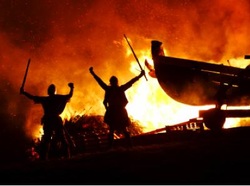
When Julius Caesar landed on the shores of Britain to wage war with the British Tribes, he ordered his men to "burn the boats". His troops would either be victorious in battle, or they would all die in battle - no one goes home through failure. Caesar gave his men "the luxury of no options" and he was victorious in his campaign.

The Spartan warriors of ancient Greece had a similar mentality. Death before dishonour was a mantra that accurately describes the Spartan war machine and they are known throughout history as the most battle hardened, persistent, fearsome, victorious, disciplined warriors of all time. The Spartans created a culture based around "the luxury of no options" and this culture created a brand of warrior that is still studied in modern military schools and will continue to be famous for ages to come.

When we look at the most successful business people, a common element for Entrepreneurs is that they find themselves in a "no options" situation early in life. Usually successful Entrepreneurs have parents who are either dead or incompetent and they have to take over the family business at a very young age. This was true for Fred Trump (Donald Trump's father), Robert Kiyosaki's "Rich Dad" and a modern examples would be Curtis Jackson (50 Cent).

Other entrepreneurs who find "the luxury of no options" choose a path in life at a young age and give themselves no way to retreat.

I was reviewing the "30 richest drummers in the world" list and two names that stuck out at me were Tre Cool of Greenday with a net worth of $45 million dollars and Dave Grohl of Nirvana/Foo Fighters with a net worth of $225 million.

Both Dave Grohl and Tre Cool dropped out of school at age 16 to play punk music. They had "the luxury of no options", burned the boats and had no way of reversing their choice.

The "luxury of no options" brings clarity and focus to the mind which is an extremely powerful tool because the mind will always find a way to achieve any vision that it is focused upon. 

Where most high school drop-outs are perceived as derelict losers who wander through life, three of the greatest entrepreneurs of the information age were all drop outs: Steve Jobs (Co-Founder of Apple), Bill Gates (Founder of Microsoft) and Mark Zuckerburg (Facebook Founder).

These men all made a choice in university to burn the boats and choose the "luxury of no options".

In my own life, the happiest, most exciting, most relevant moments of my life have all been moments where I had put myself into a "no options" situation.

I was forced to leave the corporate world (something that many people struggle with) because if I didn't quit my job, then I would be bankrupt in 3 months. Even while earning a nice comfortable salary at my job, I would still be bankrupt if I stayed. With "the luxury of no options", I quit my job, woke up every day with the intentions of finishing my failing real estate development. I was 110% focused on finishing the development at all costs and did not leave the job site daily until it was too dark to work. 

Life becomes very simple and fulfilling when there are no options. Every morning, the only thing I thought about was finishing the development. Every afternoon, the only thing I thought about was the development and every evening, the only thing i thought about was the development.

I had become immersed in my work, my focus became crystal clear, failure was not an option and I was happier than ever before. What is more interesting is that my chance of failure dramatically dropped to zero. There was literally no chance for the project to fail once I had found "the luxury of no options".

My contractor's truck was broken, so we couldn't haul materials. I loaded up my small 4 door sedan with doors, toilets and vanities (none of which fit in a small car) and drove around town to 6 different suppliers to get the necessary supplies to the job site. My general contractor, who had mentally given up on finishing the project, was amazed that I was hauling large building supplies in a small sedan and not a truck. I drove my small car with doors, lumber and vanities sticking out the passenger windows and the trunk. I had to take back roads so that the police wouldn't pull me over. My general contractor had given up, but I had "the luxury of no options."

We had no labour to paint the building, so I put on my painter clothes and painted every day myself while also hiring  anyone I could find on Kijiji to paint. I also attracted friends and family help with the labour because I had found "the luxury of no options" and everyone could see the high stakes and the importance of my success.

Somehow, the project was completed and successful within 45 days of quitting my job (I had 90 days to complete it). With the experience, I had learned some of the most valuable lessons of my life so far: 

  • When a person has their back to the wall and has no options, the failure rate for that person dramatically drops (almost to zero) and the success rate dramatically increases (almost to 100%).
  • When a person has no options their focus level sky-rockets. They become obsessed with succeeding. All distractions and procrastination are silenced.
  • Every obstacle becomes a non-issue because the motivation level of a person with no options is inhumanly strong.
  • A person with no options can achieve super-human feats that the average person with "options" will marvel at.


As a real estate investor, I frequently see part time corporate people who want to make a "smooth" transition into full-time real estate investing. For many people, quitting the corporate world and taking full control of one's time is major desire. However, this desire is often not strong enough to actually put together a concrete plan and stick to it.

For myself, my passion and desire was so strong that I put myself in a situation where I found "the luxury of no options" by accident and became successful by default. Failure was not an option for me because I literally had no options - it was live or die.

I feel the pain of the people who badly desire full control of their time and want to leave the corporate world in a "smooth" way. But after studying success, I'm not sure if there really is a possibility of a fast and smooth transition.

I'm fully convinced that there is a slow and smooth way, but I'm not sure if that method will satisfy the soul's hunger for freedom.

To paraphrase the words of Robert Kiyosaki; We can only choose one of two things in life; security or freedom. Those who choose security, end up with maximum security which is maximum security prison. Those of us who choose freedom, end up with maximum freedom, which is zero security.

For the men and women who find themselves with "the luxury of no options", they only have one choice and that is freedom at all costs. Any security they once had has been obliterated and there is only one chance for survival. 

Freedom is the only choice for these people and they pursue it with a life or death vigour that is absolutely unstoppable.

What would you give up to have "the luxury of no options"?

Have you ever found yourself in a "No options" situation? What was the outcome?

Do you value security or freedom? Which are you currently pursuing?

Thanks for reading,
Stefan Aarnio
Freedomway.ca

P.S. Please share this article if you found it insightful.


0 Comments
<<Previous
Forward>>

    RSS Feed

    Stefan Aarnio

    Stefan Aarnio is a Real Estate Investor, entrepreneur and artist based out of Winnipeg, Manitoba.His real estate website is Freedom Way Joint Ventures  His art can be seen at http://stefanaarnioart.com

    View my profile on LinkedIn

    Archives

    October 2013
    September 2013
    July 2013
    April 2013
    March 2013
    February 2013
    January 2013
    December 2012
    November 2012
    October 2012
    September 2012

    Categories

    All
    Amateurs
    Art
    Authors
    Billion Dollar Business
    Branding
    Business
    Business Building
    Buyers
    Cash Flow
    Change
    Charity
    Coaching
    Connection
    Contractors
    Deal Partners
    Deals
    Decision Making
    Distributors
    Dragon's Den
    Dreams
    Economy
    Education
    Email
    Emotional Value
    Emotions
    Enthusiasm
    Entrepreneurship
    Evolution
    Fashion
    Fears
    Franchise
    Fundamentals
    Grit
    History
    Identity
    Industry
    Instant Equity
    Instant Profits
    International
    Intrinsic Value
    Investing
    Jobs
    Joint Ventures
    Leadership
    Marketing
    Missed Opportunity
    Money
    Mould
    Needs
    Negotiation
    Net Migration
    Networking
    Outsourcing
    Passion
    Passive Income
    People
    Persistance
    Philanthropy
    Power Team
    Producers
    Professional
    Professionalism
    Profits
    Raising Capital
    Real Estate
    Recession
    Return On Effort
    Return On Learning
    Return On Relationships
    Return On Time
    Risk Mitigation
    Self Employed
    Selling
    Shark Tank
    Social Status
    Speed
    Strategy
    Success
    Tactics
    Team
    Time Managment
    Traitors
    Unlimited Cash
    Value
    Venture Capital
    Vision
    Wages
    War
    Weakness

    RSS Feed

Powered by Create your own unique website with customizable templates.