Freedomway.ca - Stefan Aarnio's Blog
  • Who We Are
  • Blog
  • Book
    • Money People Deal: The Fastest Way To Real Estate Wealth
  • Resources
    • Recommended Books
  • Bring Us Deals
  • Awards
  • Completed Projects
    • Completed Projects
    • The Benefits Of Hands Off Investing
  • Press
    • Winnipeg Free Press
    • Canadian Real Estate Wealth February 2013
  • YouTube Channel
  • Interviews
  • Art & Philanthropy
  • Strategic Partners
  • Contact
  • Exclusive Investor Club
  • New Page

The Terror-barrier: Why we don't change

11/15/2012

4 Comments

 
Picture
By Stefan Aarnio
Freedomway.ca

Remember: Please share this article if you find it helpful!

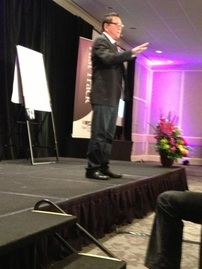
Yesterday I had the pleasure of giving a talk to a group of 50 local real estate investors in Winnipeg. The subject of the talk was "how to raise capital and take the limits off of your real estate investing career."

In business, raising capital is the #1 skill any real estate investor or entrepreneur needs to be in business. So many entrepreneurs fail because they can’t get funding for their businesses initially or they can’t expand to a profitable level.

While I was giving the talk to the 50 investors in the room, I was shocked by the following:

  • 0 people claimed that “Sales and Marketing” was their #1 skill
  • 0 people had raised capital for a “no money down” joint venture (1 person may have raised his/her hand, but wasn’t confident so I wasn’t sure)
  • 0 people had a “Capital Raising” binder/presentation ready to show to investors

Many of the investors in the room have purchased at least one or more investment properties in the past few years, but were still using their own cash and credit.

Statistically, most seminars have a 2% success rate. In any given room of 100 people , 2 people will apply the knowledge they are learning and 98 will fail to apply anything.

Statistically speaking, out of the 50 people I was speaking to, 1 will apply the knowledge shared, 49 will not.

Yesterday, there were many real estate investors in the room who wanted to take their businesses to the next level. I think most of the audience in the room saw value in learning how to raise capital. Most investors want to use“other people’s money” to purchase investment properties, but many do not know how to do it.

Although, what I was teaching was the "missing piece of the puzzle" for many of the people in the audience:

  • 0 people approached me after the event for any for of help or advice.

Perhaps I gave a bad talk.

Perhaps not.

I did receive numerous compliments on the content and delivery of the speech and I think the audience enjoyed the presentation for both entertainment and content.

More often then not, when I attend a seminar, talk or presentation, I approach the speaker after the event to

  1. Thank them for speaking and
  2. inquire about how I can learn what they had to offer (whether I can afford it or not)


My primary objective with attending a seminar, talk or presentation is to learn something and find a way to bring change into my life.

Why don’t we change?

Why don’t we take action? 

Why don’t we pursue freedom at all costs?

The answer is simple.

A wise man once said “everything we want is on the other side of fear.”

Some call this invisible wall of fear the “terror-barrier”. 

The Terror-Barrier is the only thing that keeps us from having what we want in life.

In my life, the terror barrier has held me back many times, and the only way I could break through it was by getting myself in a “no options” situation.

For change to occur, the pain of staying the same has to be greater than the pain of making a change.

People are mysterious creatures and I find that we are all motivated more by pain than by pleasure.

The average person will go to great lengths to avoid pain but will do very little to achieve joy or pleasure.

There are two decision making centers in the body:

1)   The head (The brain)

2)   The body (made up of the gut and the heart)

All thoughts pass through the head, but all actions are made through the body.

There are 4 phases of change and only in phase 4 do we achieve freedom.

Phase 1)

In phase 1, we have an “old idea” in our head, and our body (who controls the actions) performs the “old actions”.

An example of this would be a person who says: “I’m a smoker” and as a result; he or she smokes regularly.

Phase 2)

In phase 2, we get a “new idea” in our head, but our “old idea” co-exists with the "new idea". The body, who controls our actions, still acts on the “old idea”.

An example of this would be a person who says “I’m a smoker, but I’d like to quit” and as a result; they smoke regularly and show no actions that indicate quitting.

Phase 3)

We get a “new idea” in our head, and our “old idea” co-exist. The body who controls the actions acts on both the “new idea and the “old idea”.

An example of this person who says “I’m a smoker, I’d like to quit” and as a result; this person will smoke sometimes and quit sometimes.

Phase 4 is where freedom and change happen. However, few people achieve phase 4 of change because they are held back by the Terror-barrier.

The terror-barrier is a fancy way of saying “irrational fear” and the cure for fear is a disciplined, rational approach or "the luxury of no options".

However, I know first hand how hard it is to break through the barrier and in my own life, I have most often penetrated the Terror-barrier against my will.

The Terror-barrier is so strong for most people that they will never change unless they experience a divorce, job loss, large financial loss, bankruptcy, cancer, death or deadly illness.

These catastrophic life experiences push you through the terror barrier because most often “the worst” has already happened.

Once we have experienced "the worst", we become free of fear. We suddenly play the game with nothing to lose.

Usually people in these very uncomfortable situations have “the luxury of no options” and become very successful after failing. 

Phase 4)

In Phase 4, we achieve freedom. We have a “New idea” in our head and the body, who controls our actions, acts on the “new idea” only.

An example of this would be a person who says “I’m quitting smoking” and as a result, they quit.

Change is never easy, but it’s a necessary process in life. 

Einstein used to say “change is the only constant in the universe”. 

Learning how to adapt and change ourselves according to the fluctuating conditions of life is the new primary skill set in this modern world. 

This skill set is especially valuable in the new economy that we live in today.

In the past, a man or woman could count on having a career from college to retirement. Today, young people change career paths every 4 years or less.

The future does not belong to the fastest, strongest, best looking or smartest. It belongs to those who can change the fastest and re-adapt to surroundings as external change occurs.

In the information age, we experience accelerated change at an unprecedented rate and learning to change will be #1 skill set in the very near future.

Thanks for reading,
Stefan Aarnio
Freedomway.ca

P.S. Please share this article if you found it helpful

4 Comments

The 2 things you NEVER hire a person to do

11/9/2012

0 Comments

 
Picture
By Stefan Aarnio
Freedomway.ca

Remember: Please share this article if you found it helpful.

A very successful entrepreneur once said: "There are two things you cannot hire a person to do 1) Think and 2) do things in the right order".

As a serial entrepreneur, this wisdom resonated with me deeply and I have made this an absolute rule in my business.

I hire people, mostly contractors of different types to do work for me every week. Every week I am either digitally hiring contractors on eLance or physical contractors to do physical work on my Real Estate portfolio. I employ people from web developers, programmers, marketers, logo designers, carpenters, painters, general labourers, sales people, book keepers, accountants, and lawyers.

Over the years in my entrepreneurial career, I have learned the very hard way that the words of wisdom above are absolute truth.

In fact, I would venture to say that the words above are a law of business.

Disobey the words of wisdom and you will be punished in unbelievable ways.

Early in my career, I let contractors run amok because I had trusted them to:

  1. Think and
  2. Do things in the right order.


As a young, naive entrepreneur, I assumed that because I had put lots of thought and emotional energy into my venture, that they would think and do things in the right order as I had envisioned. I trusted their expertise and wanted to let them do what they "thought" was best.

In reality, I did not manage my contractors close enough and very soon had created $25,000-$75,000 worth of mistakes.

To a young entrepreneur, this is an enormous price to pay for a little bit of ignorance.

Assuming that someone you hire will Think and Do things in the right order is easily the most expensive mistakes an entrepreneur or real estate investor can make.

Virtually all distress sales in Real Estate happen because some naive or negligent entrepreneur let their contractors run amok. All distressed businesses are a result of this as well.

The highest paid job anywhere in the world is the position of "thinking".

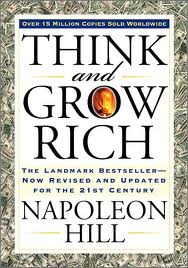
There is a famous book called "THINK and grow rich". The book is not called "OUTSOURCE and grow rich", "NEGLECT and grow rich", "MISMANAGE and grow rich" or "FIRE-AND-FORGET and grow rich".

The key to effective "thinking" is to set aside time each day just for thinking. 

My current schedule (if I obey it) has 1 hour of strategic thinking set aside per day, 2 hours of mindfeeding and 1 hour of creation per day.

That's 4 hours of either feeding my ability to think, straight thinking or creating as a result of thinking. 

These 4 hours are where all of my money is made. This is the highest paid work I do, no other task compares with these 4 hours.

CEO's of fortune 500 companies are paid disproportionally high salaries to other employees because they are the only people in the organization who are entrusted to think. Everyone else in the organization is hired to execute, or manage people who execute.

Entrepreneurs are the highest paid people in the world because they are the people world who do the majority of the thinking.

The people who think are the people who make all of the money. Unfortunately, to become a "thinking" entrepreneur is much harder than it sounds. 

To become a thinking entrepreneur is much different than hanging out at the library pondering thoughts over a cup of coffee or coming up with a great idea in the shower.

In Michael Gerber's best selling book "The E-Myth", he defines the 3 roles that an entrepreneur must play in their business. These roles are:

  1. Technician
  2. Manager
  3. Entrepreneur


The technician is the lowest paid job in the organization. This person does not have to think and they are hired to do only what they are instructed to do. Most entrepreneurs get stuck in technician roles and this is why most entrepreneurs make no money and fail. A business cannot be run from the bottom.

The Manager is a middle role in the organization. The manager is entrusted to execute tasks in the right order (as dictated by the thinking entrepreneur) and manage the technicians. Many entrepreneurs get stuck in managerial roles and unfortunately, managers do not get rich. Managers are supposed to manage execution of strategies and maintain current business. They do not create new business.

Napoleon Hill's book is NOT called "MANAGE and grow rich", it's called "THINK and grow rich".

The Entrepreneur is the highest position in an organization in both rewards and responsibility and if the entrepreneur is good, he will be able to remove himself from the organization and let the managers handle the operations. 

The entrepreneur's job is to spot strengths, weaknesses, opportunities, threats, market trends, and manage the managers. The entrepreneur is also entrusted with the two things that you can never hire a person to do:

  1. Think
  2. Do things in the right order


These two sacred roles are the entrepreneur's most important responsibilities. 

Henry Ford used to say "Thinking is the hardest work of all, that is why so few people do it".

For the entrepreneur to be effective, he must set aside time to Think and create general processes for getting work done "in the right order".

Of course, so many entrepreneurs fail because they entrust these responsibilities to their teams who cannot perform these tasks OR they fail to build a team and just operate as unthinking technicians and managers.

The most successful entrepreneurs in the world all set aside time each day for thinking, start with at least a 30 minute period each day and use it to build your:

  1. Vision plan
  2. Marketing plan
  3. Strategic plan


A ship without a rudder will always smash up on the rocks and a business without a plan will eventually crash as well.

Set aside time for thinking and take Napoleon Hill's advice to THINK and grow rich.

Thanks for reading,
Stefan Aarnio
Freedomway.ca

P.S. Please share this article if you found it helpful!


0 Comments

Speed: Why FAST wins and SLOW loses in the market

10/29/2012

1 Comment

 
Picture
By Stefan Aarnio
Freedomway.ca

Remember: Please share this article if you found it educational.

Speed is a virtue that has been coveted throughout the ages.

In the jungle, animals with speed would dominate the terrain over bigger slower animals. In evolution, animals that developed to be large with heavy armour always died out to animals that were lighter, faster and with sharp teeth and claws.

In warfare, throughout the ages, the faster more mobile armies were always able to wipe out  slower, heavily armoured forces. Whether we are referring to Atilla the Hun with his mounted archers vs the slow, heavily armoured  Roman Legion; or Hitler in WW2 with his Blitzkrieg forces that dominated the sedentary french and polish troops. 

Speed is a virtue in all arenas and is a key to victory.

Today in technology, companies that can embrace change and implement with great speed are the ones that survive. In the past, a company like Apple was able to innovate with products like the iPod, take the market by surprise and implement new ideas before any competitors could react. Apple would take over and dominate a market long before a competitor could think of stepping in.

Think of iPods... Small children call all music players iPods. A little girl will point to an analogue record player and say "look daddy, that's a big iPod!" - that is the power of speed.

In real estate investing, or investing in general, speed (in my opinion) is the difference between a novice, intermediate and advanced investor.

I was having dinner with a friend of mine tonight and we were talking about our goals for the upcoming year 2013. Every real estate investor, regardless of skill level, always wants to add more transactions and doors to their portfolio.

I mentioned to my friend that I was setting the goal of doing 100 transactions this year. This was way out of my friend's context and he couldn't comprehend that kind of volume or speed. He asked me how many transactions I have completed in 2012: "12-16 by the end of the year" was my estimate. He was impressed with my ambition and wanted to know how I was going to have an 800% increase in my business.

The answer is speed, some experts would say "velocity of money".

The general classifications for Real estate investors can be defined as follows:

  1. Novice investors do less than 5-6 transactions per year
  2. Intermediate investors do 1 transaction per month or 12+ transactions per year.
  3. Advanced investors do 100+ transactions per year

The only difference between these three investors is speed. 

NOTE: There is likely little difference in the quality of transactions between skill levels. There are many astute and careful, slow, novice investors who can earn the same or better returns then an experienced advanced investor. However, the difference between the novice and advanced is that the advanced investor does more deals, executes them faster and utilizes opportunities to compound results. 

The advanced investor is a cheetah in the jungle and the novice is the turtle.

There is nothing wrong with being the turtle, however, the cheetah will be dominant in the market and will have access to the best opportunities and more capital due to visibility.

A problem I have had in my past businesses has been velocity. In the past, I gravitated towards slow "residual" type businesses.

  1. One of my first businesses was a self-employed guitar practice where I traded my time for money. This was extremely slow because, although I had lots of clients and low over head, it was very difficult to compound or grow this business. The residual "cash-flow only business model" made it very hard to grow because there was never an injection of cash or credit. Every month I would take 22-25 little cheques into the bank and cash them. There was never a big cheque that could instigate growth.
  2. Another business I started in my early twenties was my Debt buying business. Debt buying is a very simple concept. Debt buyers buy charged off, non performing credit cards (or other debt products) for pennies on the dollar and outsource them to collection agencies for residual income. However, this business is also a residual, cash flow business and it was very hard to grow this business without taking on large debt and long term risk as well.
  3. My third business was my buy-and-hold Joint Venture real estate portfolio. This business was great because I could Joint Venture with many money partners and have growth every month, but the growth and speed was linear, and again, I was seduced by the cash flow of the business and was not looking at the speed of the business. A deal would take me 1 whole month to find, get under contract, find a JV partner, deal with the financing, deal with the legal, take over the property, fix the problems on acquisition, show the suite to tenants, lease up and then repeat. I became trapped in my own labour and the velocity of this strategy kept me small. I was a turtle.

All of these businesses are functional: However, the businesses above are slow, cannot grow on their own cash, cannot expand easily, cannot gain any market share and have a disproportionate amount of risk and liability when compared to the upside.

The debt buying business and the buy-and-hold JV's also are big and clunky because they rely on debt financing and bureaucratic approval from banks etc. to grow.

These models are the slow and heavily armoured roman legions that were destroyed by the fast moving mounted cavalry of Atilla the Hun. The Huns were fast, mobile, light, hit the battle field by surprise and cherry picked the best opportunities on the field.

My new strategy does not focus on buy and hold, instead it focuses on three FAST strategies:
 
  1. Wholesaling
  2. Lease options
  3. Buy-fix-sell

Because my goal is to have 100 TRANSACTIONS and not hold 100 DOORS at the end of the year, I must focus on fast strategies. Speed is key and I don't want to get weighed down in a slow, long renovation or a long term buy and hold (although these are good models).

Three of the fastest Real Estate strategies (in my opinion) are wholesaling, lease options and buy-fix-sell.

However, to see the effects of choosing fast strategies, lets see the following strategies in terms of TIME so that we can compare them to the slower strategies I used to use.

  1. Wholesaling has a time frame of less than 30 days, usually 7-14. It is a fast, no debt, "no buy" strategy that creates fast cash and fast transactions.
  2. Lease options have a time frame of less than 30 days to fill or set up. They are fast, can have no debt, are a "no buy" strategy that creates fast cash and fast transactions.
  3. Buy-fix-sell has a time frame of less than 90 days (I have completed some buy-fix-sells in 30 days, but that isn't every deal). These deals are fast, carry debt (sometimes hard money), require capital for acquisition but create more profits with slightly more work.


Every single strategy I am using can be executed within a 30 day time frame. Time is the real currency in the market, not money. Money can be manipulated and recreated after it is lost... Time is lost forever when wasted and it is the REAL limiting factor in any business.

Since I have chosen 3 fast, "light on debt and cash" strategies, I am confident that with the right team and systems, I can achieve my goal of 100 transactions and earn the rights to the title of "advanced investor".

If you are interested in working together on a deal for a share of the profits, please contact me on the freedomway.ca contact page and we will see if we have a fit.

In the meantime,

Thanks for reading,
Stefan Aarnio
Freedomway.ca

P.S. Please share this article if you found it educational.


1 Comment

Turning Pro: Professionals, Amateurs and Traitors with Robert Kiyosaki.

10/28/2012

1 Comment

 
Picture
By Stefan Aarnio
Freedomway.ca

This weekend I had the pleasure of flying to Edmonton with one of my partners to hear Robert Kiyosaki, author of Rich Dad Poor Dad speak. Robert is around 65 years old now and has had some very hard experiences in the past few years.

  1. He has severed ties with a founding partners of the Rich Dad company. These people were stealing from him and betrayed him.
  2. He was recently in the media for going "bankrupt" and was sued for breach of an agreement with Learning Annex.
  3. CBC Marketplace did a fairly slanted review of his education company in the last few years and really mis-represented his brand in canada.

Life is not easy when you are on top... Everybody wants a piece of you.

Even still, Robert is tough as nails and still able to evolve, grow and innovate his business.

As an audience, we were treated to an entire morning and most of the afternoon with Robert sharing some of his most recent thoughts. Many of the things Robert taught were contextual and very high level concepts that have brought his life into a new level of focus.

Robert's talk today was mostly self development and had very little to do with money at all. He talked mostly about character, context and personal growth (which is in my opinion more important than the nuts and bolts of money).

One book that has recently changed Robert's life is called "Turning Pro" by Steven Pressfield.

Robert has a communication style where he is able to take a hopelessly complicated subject and make it simple.

For example, Robert can explain financial derivatives (a topic that no one REALLY understands) by using the analogy of oranges: Oranges are the underlying asset, orange juice is the derivative, a box of oranges is a package of derivatives that were sold as an "investment". If the oranges in the box are bad, then the juice and the box of oranges are bad. This is how the American real estate bubble was built and collapsed after people found out "the oranges were bad". This analogy makes derivatives so simple a 3 year old could understand it.

People understand oranges, orange juice and boxes, but they do not understand complicated financial concepts. This is why entire countries can get robbed by a few smart white collar criminals and no one goes to jail. It's also whywhy Robert is the king of his field.

Today Robert shared with us a concept from the book "Turning Pro"

In business, or in life, there are 3 types of people:

Professionals, Amateurs and Traitors.

  1. Professionals are people who solve problems. These are the people you can call on, hire to solve a problem and it is fixed without any hassles and is done on time and on budget. These people you will want to call again and keep close to you. These people are worth their weight in gold, cherish them.
  2. Amateurs are people who create problems. Amateurs are people who are in a field, but cannot fix problems with 100% satisfaction. They often fix a problem but do it incorrectly and create another problem in the process. These people are not professionals because they do not practice the basics and have little discipline. They charge the fees of a professional, they think they are a professional but are NOT professional by any means.
  3. Traitors are people who steal life. Traitors can disguise themselves as professionals or amateurs and steal money, time and life from other people. They are often not conscious of their thievery and often mean well. However, either by incompetence, greed or another character flaw, they end up stealing the lives of other people. The only way traitors can get what they want is by stealing from others.

Robert shared a story with the group today about a group of AMATEURS he hired to maintain his lawn. Robert paid the AMATEURS a cash deposit and in few weeks his lawn looked worse. He then asked the AMATEURS why the lawn was worse and they said "pay us more money and it will look better"... A few weeks later, the lawn looked EVEN WORSE. Robert said again "why is the lawn worse?", the AMATEURS replied "pay us more money" once again. The cycle went on until the lawn looked terrible and Robert fired the AMATEURS. At the end Robert was frustrated, wasted money, time and had a lawn that was nearly destroyed.

After Robert's lawn was nearly ruined, he hired a PROFESSIONAL and asked him "what will it take to fix this lawn?" The PROFESSIONAL said "$5,000 and five months". Sure enough, in five months, the lawn looked absolutely beautiful. No hassles, no mess, on time, on budget and Robert was extremely happy.

"Your life sucks when you are hanging out with amateurs and traitors, you give them money and you don't get results." Said Kiyosaki.

3 quick questions you can ask a potential business partner to find out if he is an Amateur, Professional or Traitor:
  1. What is your goal in your business or working with me?
  2. What are you will to do to achieve this goal?
  3. If the answer to #2 is "nothing" then this person is not a professional and likely not the best asset to your team.

"Some of the biggest traitors (in society) are school teachers. They don’t have the guts to resign." said Robert. School teachers can steal and ruin more lives through mis-educaiton and mis-information than any other person in society... worse off, they always get paid whether they do a good job or bad.

Professionals practice the rudiments of their art form every day and strive to be better each and every day. Their goal is to become the best in their field and are willing to pay the price required for success. In the words of Nido Qubein success is "Painful", which means you have to PAY-IN-FULL for it. Nothing in this life is free. 

Amateurs are happy with just doing enough, but do not have the drive to be the best. They are happy operating at a mediocre level, posing as professionals and charge people even when they don't get results.

Traitors are people who have to steal to get what they want in life. They may look like amateurs or professionals and have good intentions, but when it comes down to their actions, they become thieves and steal time, money and resources.

One exercise that Robert had us do was to write down 25 people that we spend time with in our personal and professional lives.

Write the word "professional", "amateur", or "traitor" next to each name and find the patterns and associations in the names.

I did this for myself and noticed that I have been running my career as a "Pro", my private life as an "amateur" and have a graveyard of "traitors" that I try not to think about.

More interesting is that all of my "pro's" are associated and work together as a team with me in their respective fields. The "amateurs" are all associated and transact together. They stick together, are tightly bonded and through their daily choices, are committed to mediocrity without even knowing it. I noticed the amateurs in my life referred more amateurs to me who posed as professionals (this was very alarming). The "traitors" were all associated and approached me as a group as well. They were a tight knit group that was like a pack of wolves. Very scary to see a group of traitors aligned in business and all working together, you can get killed if you find yourself working with a pack of traitors. It cost me dearly to deal with these people in the past.

It was extremely revealing to see how my social circles were constructed when measured by this system.

Please take a moment to do this for yourself, you may find out something new about who you are transacting with. You will even find out how you are running the different aspects of your life.

P.S. Don't be afraid to load up the "traitor" category, this a very important category and I overlooked it because I generally do not focus on people who have "screwed" me. This category is in some ways more important than the other two.

Thanks for reading,
Stefan Aarnio
Freedomway.ca

P.P.S. Please share this article if you found it helpful!


1 Comment

Mastering Relationships: The 7 levels of intimacy, a system by Matthew Kelly

10/25/2012

5 Comments

 
Picture
By Stefan Aarnio
Freedomway.ca

In the words of the famous poet John Donne:

"No man is an island."

Whether you are a new born baby or the President of the United States, we all rely on relationships and our networks for our basic survival and our ability to thrive.

For those of us who are pursuing entrepreneurship, business or real estate investing; our relationships are our one and only asset.

We all hear the guru's say: "your network equals your net worth", but how do we build, grow and maintain a rich network of people?

The most successful people in society are the ones who can establish, build and maintain a large number of significant, intimate, relationships.

But how do we connect on a significant level?

Most people are fairly adept at establishing relationships with people who are similar to themselves. They can find similar interests and form "intimacy" and bonds with people who are THE SAME as them over time.

However, most people do not understand the rudiments of establishing a relationship. Further, most people do not know how to master intimacy and bring people closer to them quicker.

Mathew Kelly is an author and relationship expert who wrote one of the books that influenced entitled: "The Seven Levels of Intimacy".

I have studied Mathew's work for years and have applied it in my networking, personal life, sales, negotiations and important meetings. It helps me understand people and truly connect with them so that I can find what they need and actually help them.

Mastering the 7 levels of intimacy can make or break you when meeting someone COLD and you know nothing about them. Many of us are talented at working with WARM meetings, but COLD meetings have higher requirements for establishing connection.

I am naturally a "people person" and can connect very easily with people. However, it's not enough to know HOW to connect... we must understand WHY we connect and HOW connection is established.

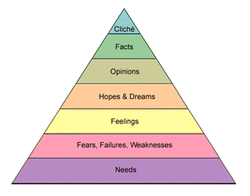
The 7 Levels of Intimacy are in sequential order:
  1. Cliché's
  2. Facts
  3. Opinions
  4. Hopes and Dreams
  5. Feelings
  6. Weaknesses and Fears
  7. Needs

The seven levels of intimacy work in a sequence. You cannot jump to the next level of intimacy without succeeding on the previous level.

For example, conversations flow through the levels of intimacy in sequence from level 1 to level 7 and they do not deviate from this rule - EVER. It's very hard to jump to the "next level" without satisfying the previous level. Furthermore, if you create a disagreement and blockage at a level, you will not advance into the higher levels until you remove the blockage. These levels need to flow and creating conflict at one level will stop the sequence of connecting.

For illustration purposes, I will artificially construct a conversation between two hypothetical people that could accelerate from level 1-7 in less than 3 minutes:
  1. LEVEL 1: Cliché's - ME: "hey, how are you?"... YOU: "I'm good!"
  2. LEVEL 2: Facts - ME: "Did you get caught in the rain today?". YOU: "yes I did, I can't believe the amount of rain outside!!"
  3. LEVEL 3: Opinions - ME: "What do you think about the Winnipeg Jets coming back to town?" YOU: "I think it's great for the city, it really helps put us on the map."
  4. LEVEL 4: Hopes and Dreams ME: "It sure does put us on the map! Why were you running around in the rain today? What would you rather be doing?" YOU: "Ugh, I was running around in the rain because I'm making deliveries for my office, I'd rather be travelling the world!"
  5. LEVEL 5: Feelings ME: "How would you feel if you didn't have to run around in the rain any more and could travel the world in the way you want?" ... YOU "I would absolutely love that. Nothing excites me more than travelling".
  6. LEVEL 6: Fears/Weaknesses - ME "What is stopping you from pursuing your dream? What's holding you back?" ... YOU "I don't want to burden my family with my selfish dream, I need to support them or they won't survive without me"
  7. LEVEL 7: Needs - ME "Hmmm... What would your family need to survive so that you can pursue your dream and everyone remains happy?" YOU "well... etc."

Whenever I am in conversation with someone, whether it is brief 5 minute meeting or a long 2 hour talk, I like to know WHERE I am in the 7 levels of intimacy so that I can accelerate and move to the next level if I feel like I need to.

Everyone has needs, and if you can find another person's needs, you can truly help them and create life lasting bonds and relationships. 

NOTE: If you are selling or negotiating, you cannot "close" until you are on level 7.

The majority of the population are pre-programmed to be socially guarded and will conceal weaknesses and needs until you have successfully moved through levels 1-5.

TIP: Once you have hit level 5 (feelings) you have reached an emotional level and connection starts to begin. 

Many newbie networkers, salespeople or negotiators will ask right of the bat "what are your needs, what do you need?". I especially see this in the network marketing community when I get pitched by new network marketers.

TIP: If you are going to meet someone for lunch, talk for 58 minutes to build a relationship and 2 minutes of transactional business at the very end. Get them up to level 7 and close in the last 2 minutes. So many people try to talk business far too early and not use their time to establish a proper connection or analysis of what the other person truly needs. Approach the other person with a "how can I help you?" attitude.

Trying to connect on level 7 without building rapport, connection or intimacy through levels 1-6 is nearly impossible. You will get concealment of facts and lies about levels 6 and 7 until you have established a proper base connection.

At best, your prospect will feed you a lie to deflect your inquiry about their higher level needs and will likely say: "I'm fine, I really don't need anything". 

How often do we hear that on a daily basis from the people around us?

EVERYONE NEEDS SOMETHING, WE ARE ALL LOOKING FOR THINGS. WE ALL NEED THINGS ALL THE TIME. THE QUESTION IS, WHAT DOES OUR COMPANION NEED?

Connection happens when you are able to navigate the conversation through levels 1-7 in the proper sequence, you may find out that (for example) "Their father just died and they're feeling vulnerable. They are the executor of his house and don't know who to talk to about real estate. They are looking for an expert. They don't like realtors and need to sell immediately but afraid of contracts, contracotrs, salespeople and commissions. They also don't want to pay for repairs."

Opportunities come from connecting and being intimate with the people we come into contact with.

All people, rich or poor want one thing... We all want to connect. If you can connect with a person, and move them through the levels of intimacy without creating conflict or blockage in the sequence, you will find what motivates them, what scares them, what their concerns are and finally what they NEED to feel secure to work with  you.

Mathew Kelly has recognized a brilliant pattern in social behaviour and has cracked the mechanical code for human connection. If you can memorize or learn a few key questions to "move through the levels", then you will never be stuck in a conversation with nothing to say ever again. You will never be stagnant and will be a master of connection.

The following questions are ones that I have learned years ago and memorized from  http://www.villagecounseling.net. Knowing a few of these key transition questions will transform you into an instant "people person". I have seen results for years using this method and have been connecting deeper and faster with people than ever before. Please enjoy the following resource:

Questions to Help You Navigate the 7 Levels of Intimacy:


  1. Cliché
    • How are you?
    • What have you been up to lately?
  2. Facts
    • Non-personal
      • What was the score of the game?
      • What is the weather forecast?
    • Personal
      • What did you do today?
      • What have you learned recently?
      • What have you been reading lately?
      • What is your favorite color, food, song etc.?
  3. Opinions
    • What are your preferences concerning…?
    • What are your beliefs about…?
    • What do you think about…?
  4. Hopes and Dreams
    • If you could live any way you liked, how would you like to live?
    • If you could live anywhere in the world, where would you like to live?
    • What goals do you have for your life?
    • What area of study would you like to become an expert in?
    • If you could be famous for something, what would you like to be famous for?
    • What would you like written on your tombstone? In your obituary?
    • Who would you like to help? How would you help them if you could?
    • What one thing would make you truly happy?
    • Who are the people you’d like to learn from in life?
    • What personal qualities do you hope to develop in the future?
    • What skills do you hope to develop in your lifetime?
    • What do you dream about being the best in the world at doing?
    • What are 5 things you dream about having?
    • What are 5 things you dream about doing?
    • What are 5 things you dream about being?
    • Who are 5 people or groups you dream about helping?
    • What would you do if you knew you could not fail at it?
  5. Feelings
    • When in our life have you felt special to others?
    • Who in your life made you feel safe, loved, accepted? How did they do that?
    • Who in your life made you feel the most rejected, devalued, abandoned, invisible?
    • What are you most passionate about?
    • What do you feel about:
      • Your relationship to God?
      • Your most significant friendship?
      • Your relationship to your parents?
      • Your relationship to co-workers?
      • Your reputation in the community?
    • How secure do you feel in your life right now? (Why, or Why not?)
    • How significant do you feel in your ability to contribute to others, to your community, to the world? (In what way? Why, or Why not?)
    • Do you feel like you are becoming the person you want to be?
    • Do you feel like you belong?
    • Do you feel competent in your ability to build something of value?
    • What are the biggest hurts have you experienced in the past?

  6. Fears, Failures, Weaknesses
    • What makes you feel like you don’t measure up?
    • What makes you feel like you are unlovable?
    • What do you think would make others reject you?
    • What are some lies you’ve been told in the past?
    • What do you feel you must hide from others out of fear that they would reject you?
    • What makes you feel ignored?
    • What makes you feel rejected?
    • What makes you feel humiliated?
    • What makes you feel incompetent?
    • What makes you feel like a failure?
    • What makes you feel inadequate?
    • What is your biggest fear in life?
  7. Needs
    • Spirit – what do you need to thrive spiritually?
    • Soul – what do you need to thrive in your relationships?
    • Mind – what do you need to learn and grow in to thrive mentally?
    • Strength – what do you need thrive physically?
    • When have you experienced great joy?
    • Describe what you think constitutes true happiness?
    • How do you help others experience joy?
    • What do you need in order to be secure?
    • What do you need in order to be safe?
    • What do you need in order to be significant?
    • What do you need in order to be competent?
    • What do you need in order to be powerful?
    • What do you need in order to belong?
    • What do you need to be clear about?
    • What do you need in order to build something of lasting value?
    • What do you need to know God better?
    • What do you need to feel special to others?
    • What do you need in order to feel like you are understood?
    • What do you need in order to do something great?
    • What do you need in order to achieve something that will last?
    • What recognition do you need?

If you can memorize a few of these key transition questions to "accelerate" and master conversational intimacy then you will connect every time! You will become a master of creating personal connection with the people you network with, meet, sell and negotiate with. I can guarantee that you will see HUGE results in the depth of personal connection and opportunity in every relationship. If you can master the system above.

I challenge you take some time to study this list and implement it in your day to day interactions, you will not be disappointed.

Thanks for reading,
Stefan Aarnio
Freedomway.ca

P.S. Please share this article if you found it helpful!

P.P.S. "The 7 levels of intimacy" is available in the Resource section of Freedomway.ca should you wish to purchase a copy (highly recommended).


5 Comments
Forward>>

    RSS Feed

    Stefan Aarnio

    Stefan Aarnio is a Real Estate Investor, entrepreneur and artist based out of Winnipeg, Manitoba.His real estate website is Freedom Way Joint Ventures  His art can be seen at http://stefanaarnioart.com

    View my profile on LinkedIn

    Archives

    October 2013
    September 2013
    July 2013
    April 2013
    March 2013
    February 2013
    January 2013
    December 2012
    November 2012
    October 2012
    September 2012

    Categories

    All
    Amateurs
    Art
    Authors
    Billion Dollar Business
    Branding
    Business
    Business Building
    Buyers
    Cash Flow
    Change
    Charity
    Coaching
    Connection
    Contractors
    Deal Partners
    Deals
    Decision Making
    Distributors
    Dragon's Den
    Dreams
    Economy
    Education
    Email
    Emotional Value
    Emotions
    Enthusiasm
    Entrepreneurship
    Evolution
    Fashion
    Fears
    Franchise
    Fundamentals
    Grit
    History
    Identity
    Industry
    Instant Equity
    Instant Profits
    International
    Intrinsic Value
    Investing
    Jobs
    Joint Ventures
    Leadership
    Marketing
    Missed Opportunity
    Money
    Mould
    Needs
    Negotiation
    Net Migration
    Networking
    Outsourcing
    Passion
    Passive Income
    People
    Persistance
    Philanthropy
    Power Team
    Producers
    Professional
    Professionalism
    Profits
    Raising Capital
    Real Estate
    Recession
    Return On Effort
    Return On Learning
    Return On Relationships
    Return On Time
    Risk Mitigation
    Self Employed
    Selling
    Shark Tank
    Social Status
    Speed
    Strategy
    Success
    Tactics
    Team
    Time Managment
    Traitors
    Unlimited Cash
    Value
    Venture Capital
    Vision
    Wages
    War
    Weakness

    RSS Feed

Powered by Create your own unique website with customizable templates.